
Ricoh GRIV VS Fujifilm X100VI
In this blog I will be comparing the Fujifilm X100VI with the Ricoh GRIV. I have owned and used both of these since launch, so I’m well placed to give this overview.
I don’t know your requirements for a camera, so I will assume you want a small, pocketable, fixed lens system that you can use for travel, street photography, and documenting your life. This is the angle I will take when comparing these two cameras.
Focal Length
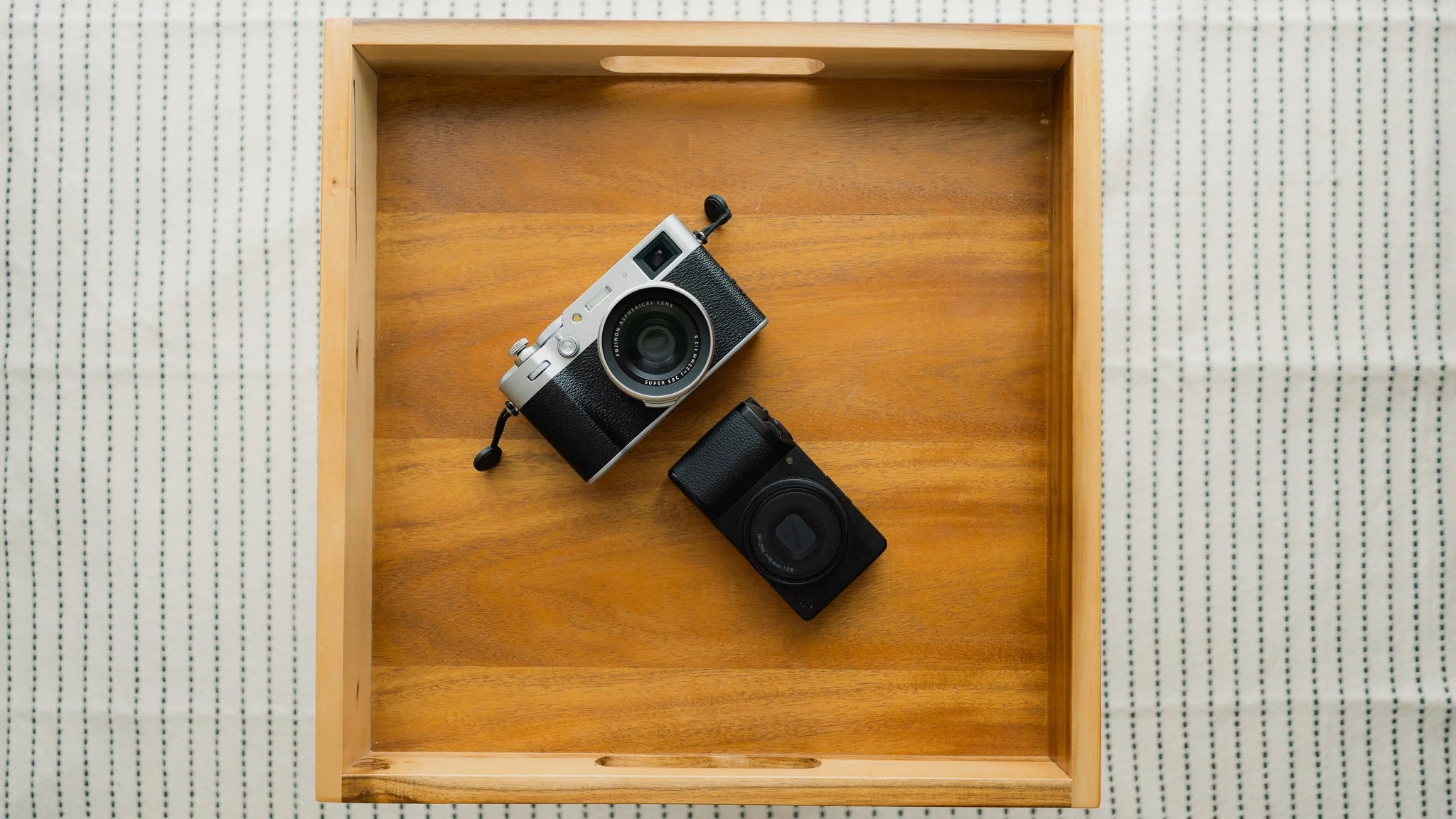
The biggest decision you will need to make is regarding the focal length, as that’s something you can’t change later. While both cameras can take various adaptors to modify the focal length, it’s not the same as changing an actual lens. The Fuji has a fixed 35mm focal length, while the Ricoh comes in at 28mm. These are full-frame equivalent focal lengths.
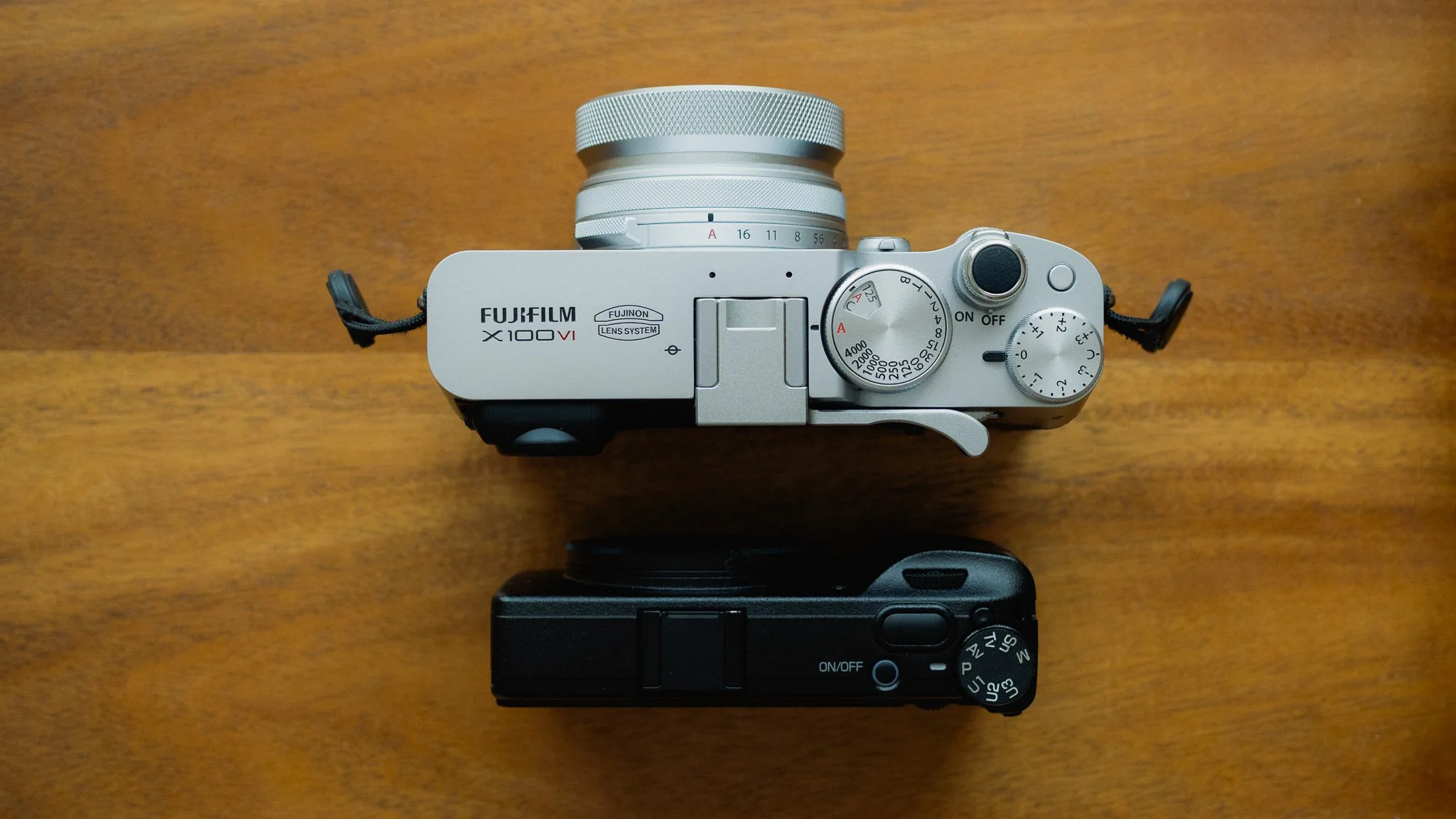
This is very subjective and opinions will differ, however my take is that the 28mm is great for documenting your day, and it has a similar look to the default camera on your iPhone. The 35mm is still wide but now you have some structure and an easier job composing the scene. For me 35mm is the ideal travel and street photography lens because everything looks natural and as it should. Of course the 28mm can easily be cropped to 35mm, but not the other way around. If you mostly use your iPhone for photography, I would go for the Ricoh. If you want to slow down and really focus on the photography, I think the 35mm of the Fuji will be better.
Size & Weight
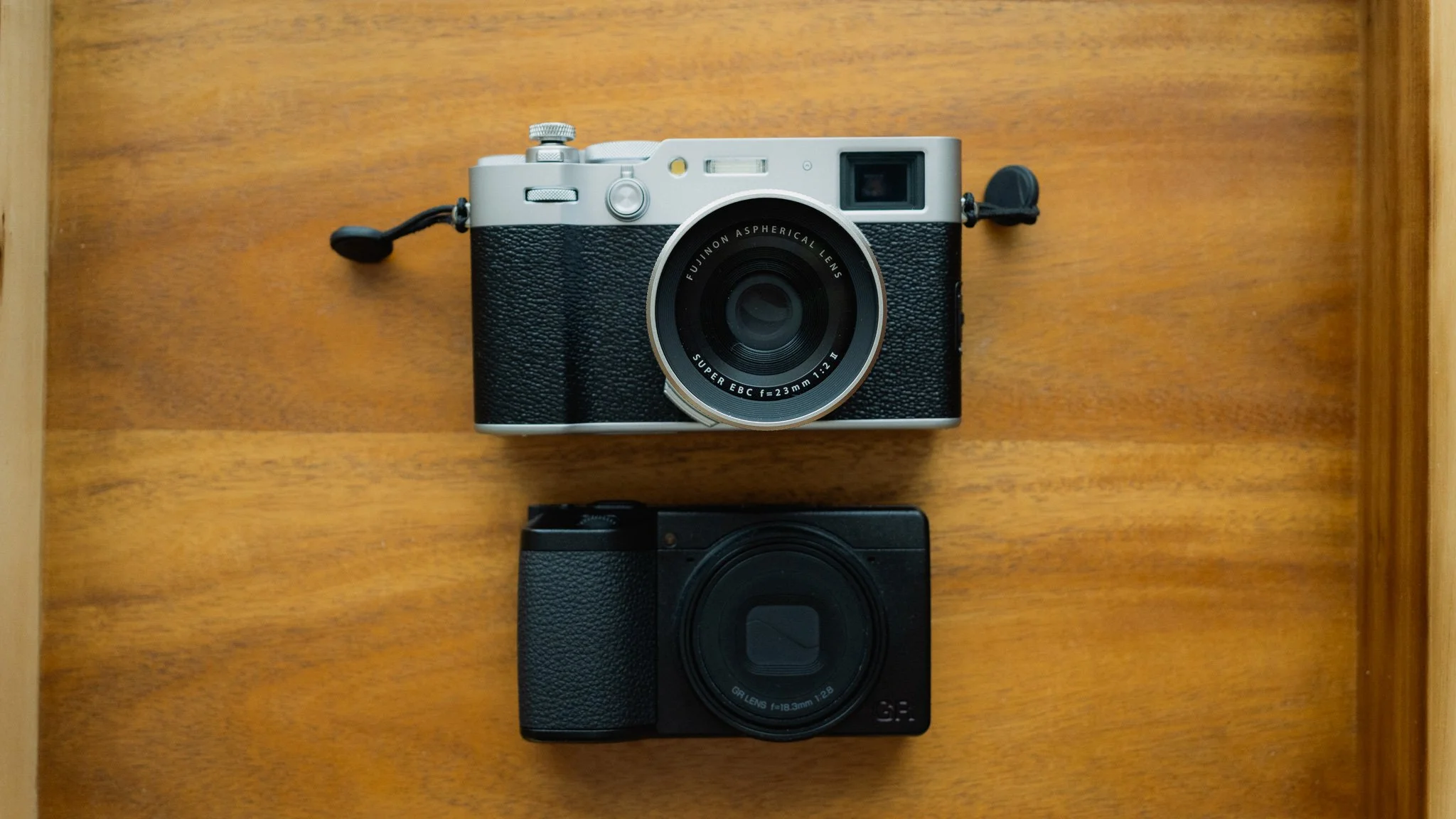
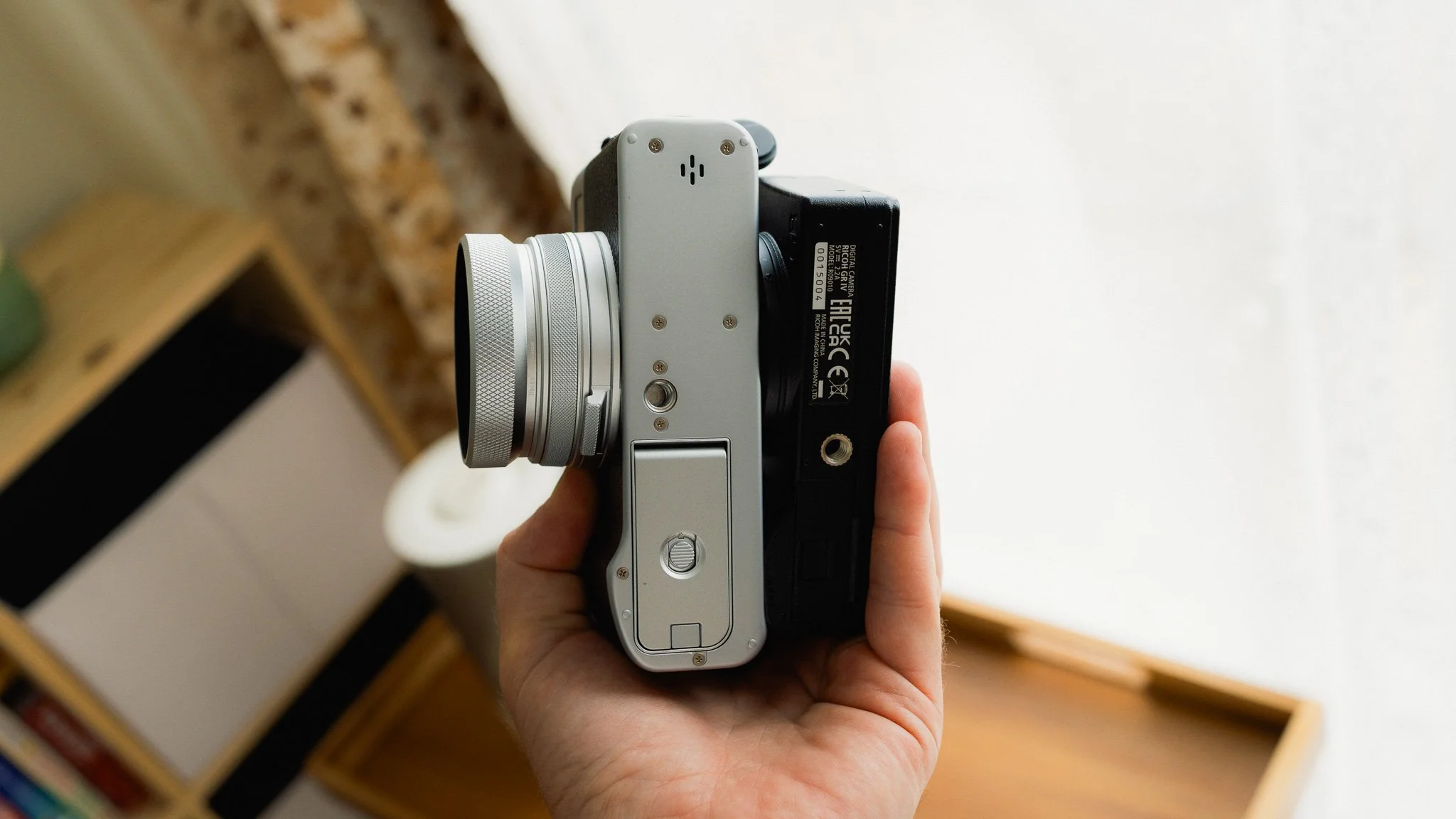
There is no contest here. The Ricoh GRIV is substantially smaller and lighter than the Fuji X100VI. The Ricoh can easily fit into a trouser pocket. The X100VI would need a large coat pocket. If you want the smallest footprint, the Ricoh is the only choice.
Appearance
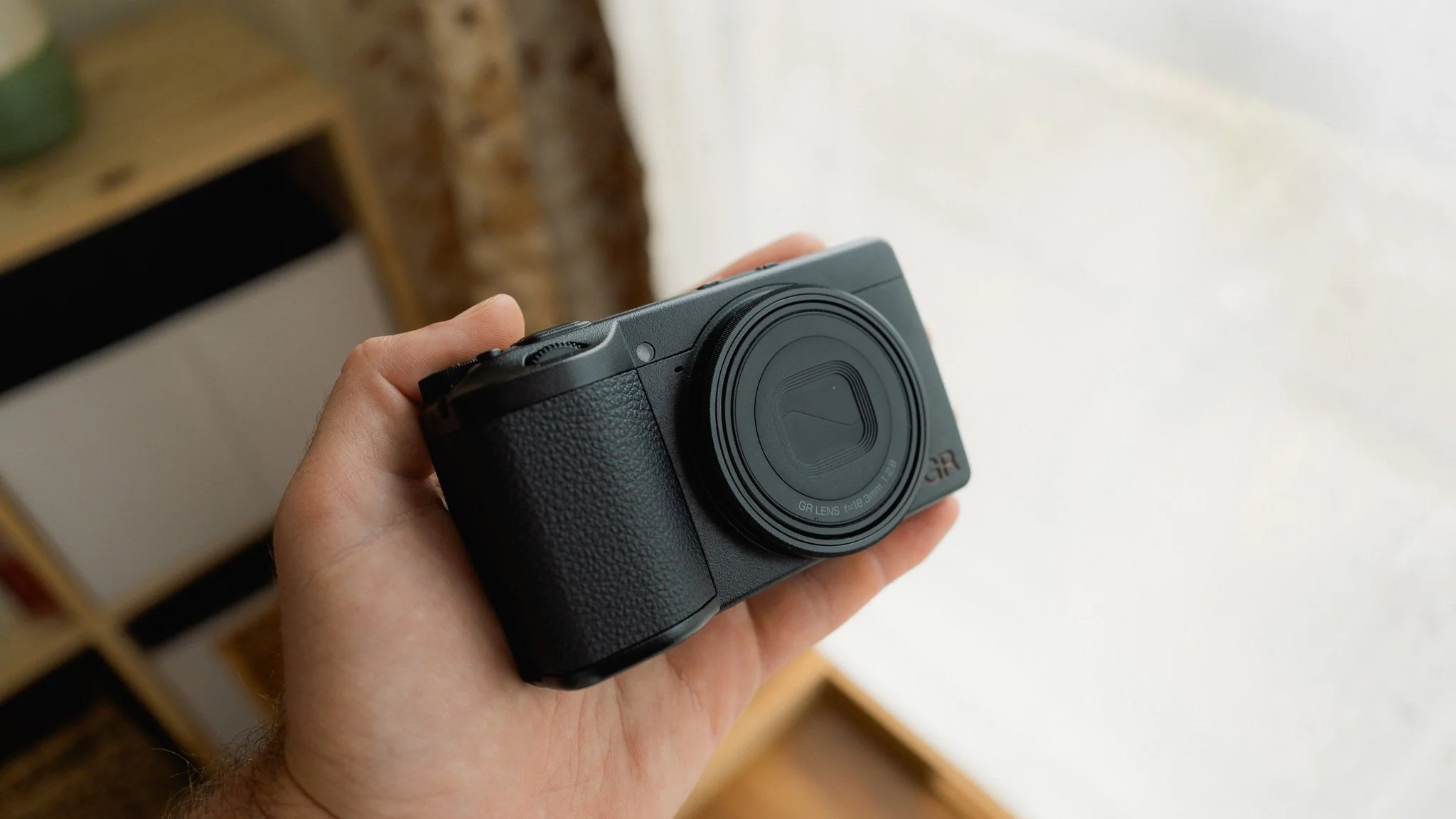
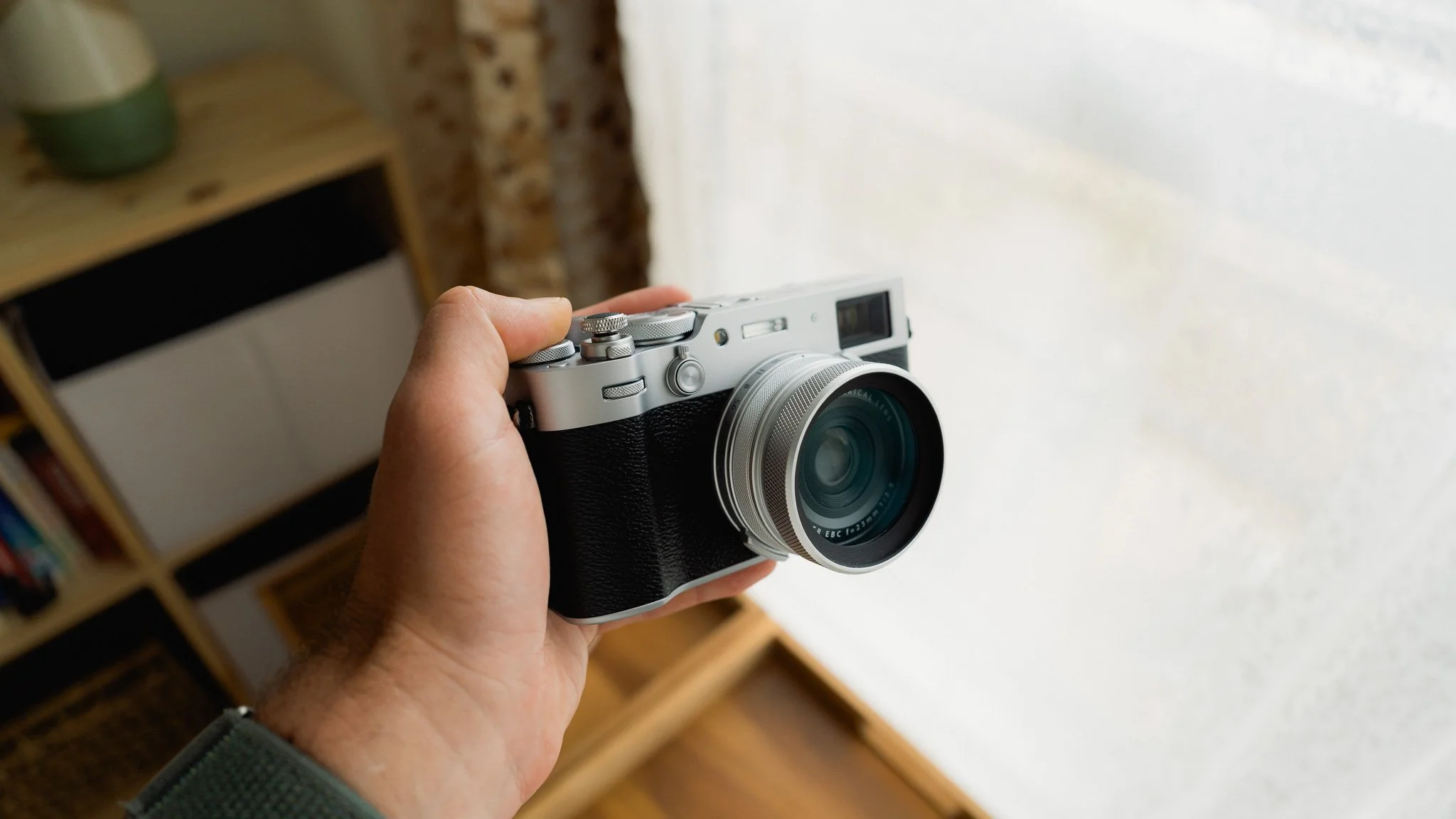
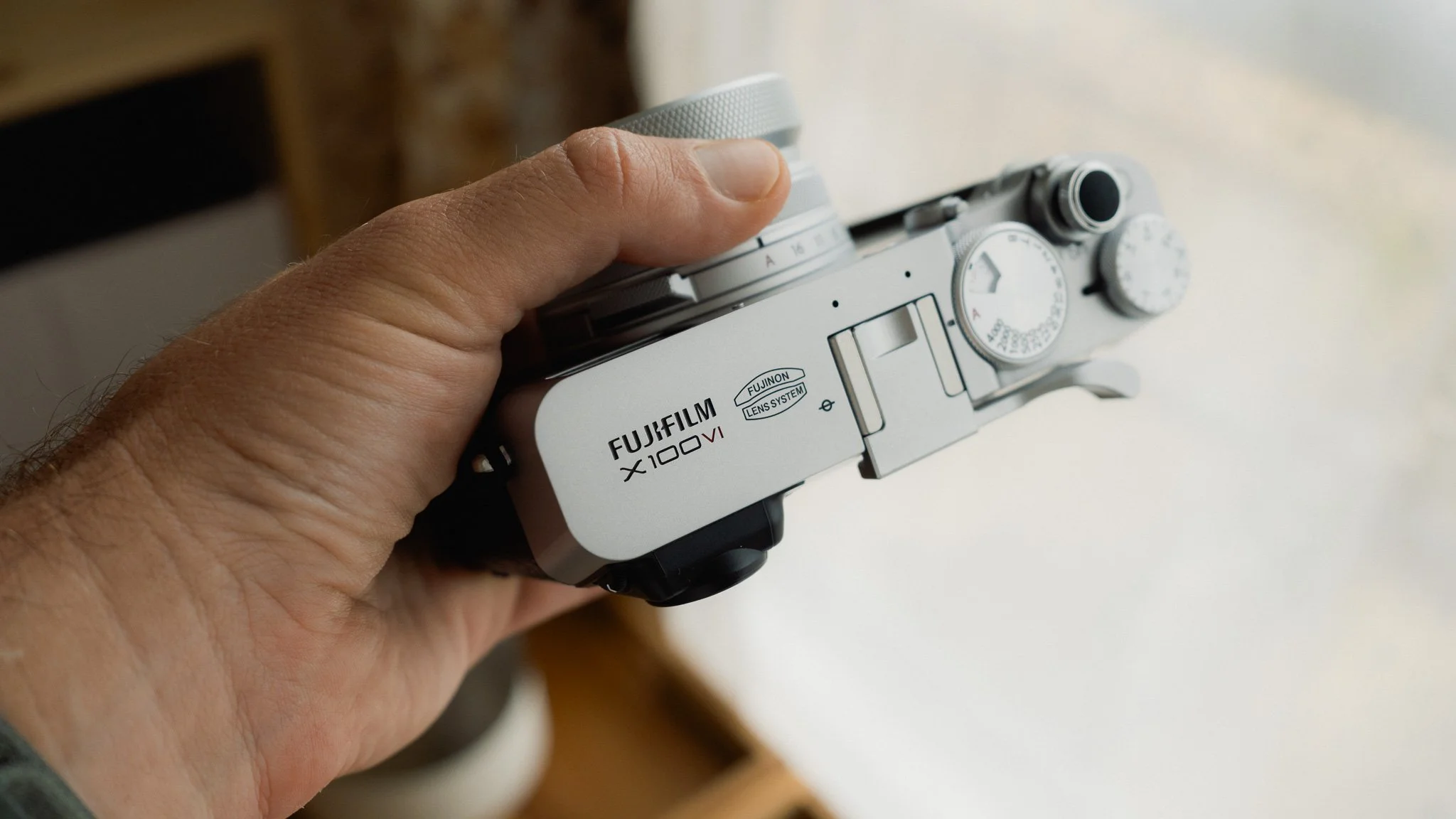
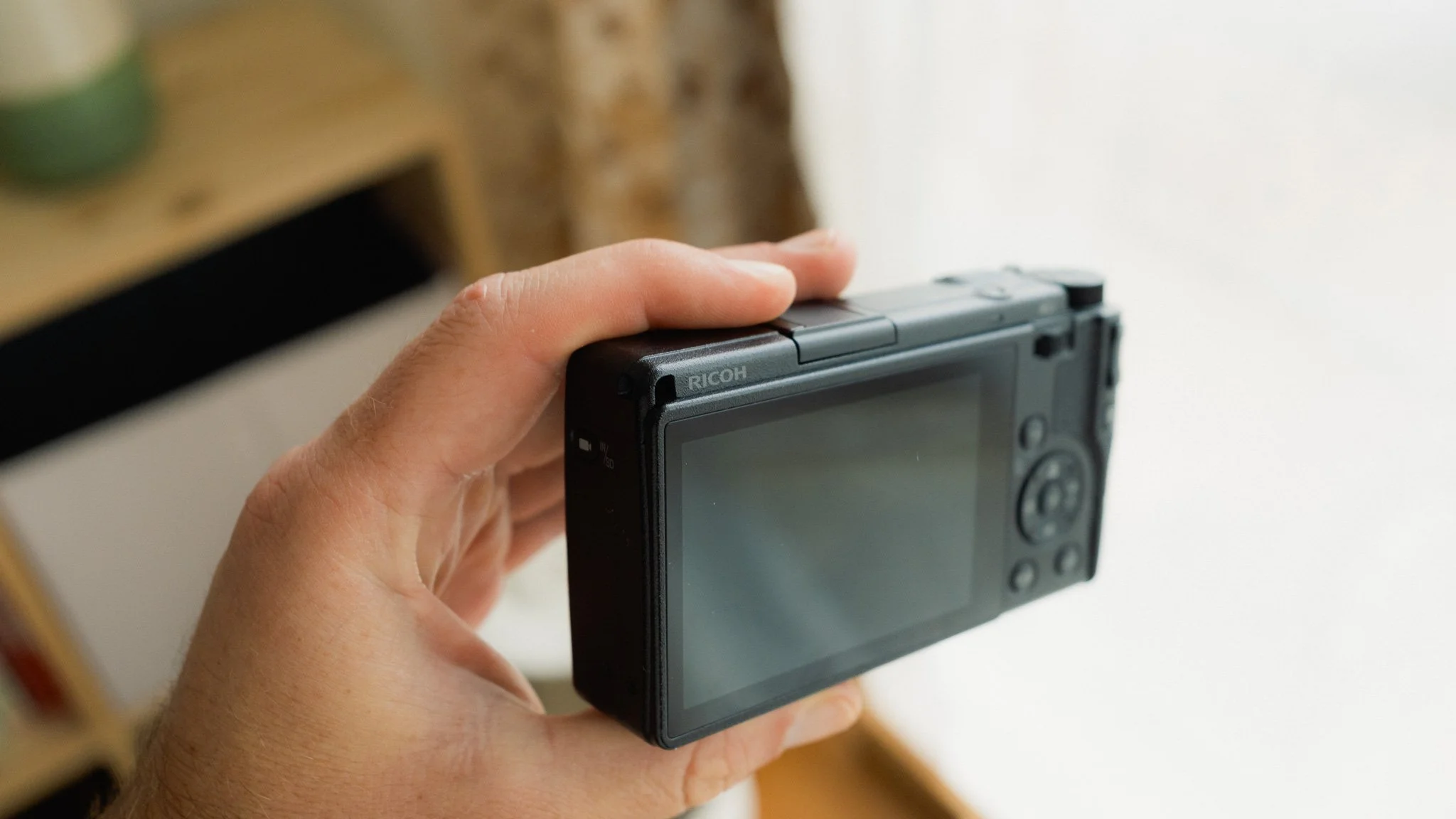
The Fuji looks like a proper camera, and to be honest it’s one of the best camera designs out there. While it looks great, it sticks out like a sore thumb, especially in silver. The Ricoh looks like a cheap point-and-shoot. Depending on where or what you’re shooting, the Ricoh could be a better option.
Price
This is different depending on sales and where you are, however in the UK, at the time of writing, the Ricoh is £1300 and the Fuji is £1600. When comparing the Fuji to the GRIII last year, the price difference was substantial enough to be a major deciding factor. Now, with the GRIV costing £300 more than the predecessor, that price gap is halved. £300 is still a lot of money, and for some it might be a deal breaker, but at this stage, I don’t feel £300 is enough to justify getting one over the other.
Build Quality
In general, the build quality is very similar. Both use metal in the build, both feel solid, and both feel like they will last. With that said, I find the Fuji X100VI to be a step above when it comes to overall fit and finish. Either way, both are great.
Weather Sealing
The Ricoh does not have any weather sealing. The X100VI has full weather sealing apart from the lens. If you want the entire system sealed, you would need to add a lens filter, which can double the size of the lens. If you must have weather sealing, the Fuji is your only option. The GRIV can also take an accessory that effectively seals the lens element, but this isn’t the same as proper weather sealing.
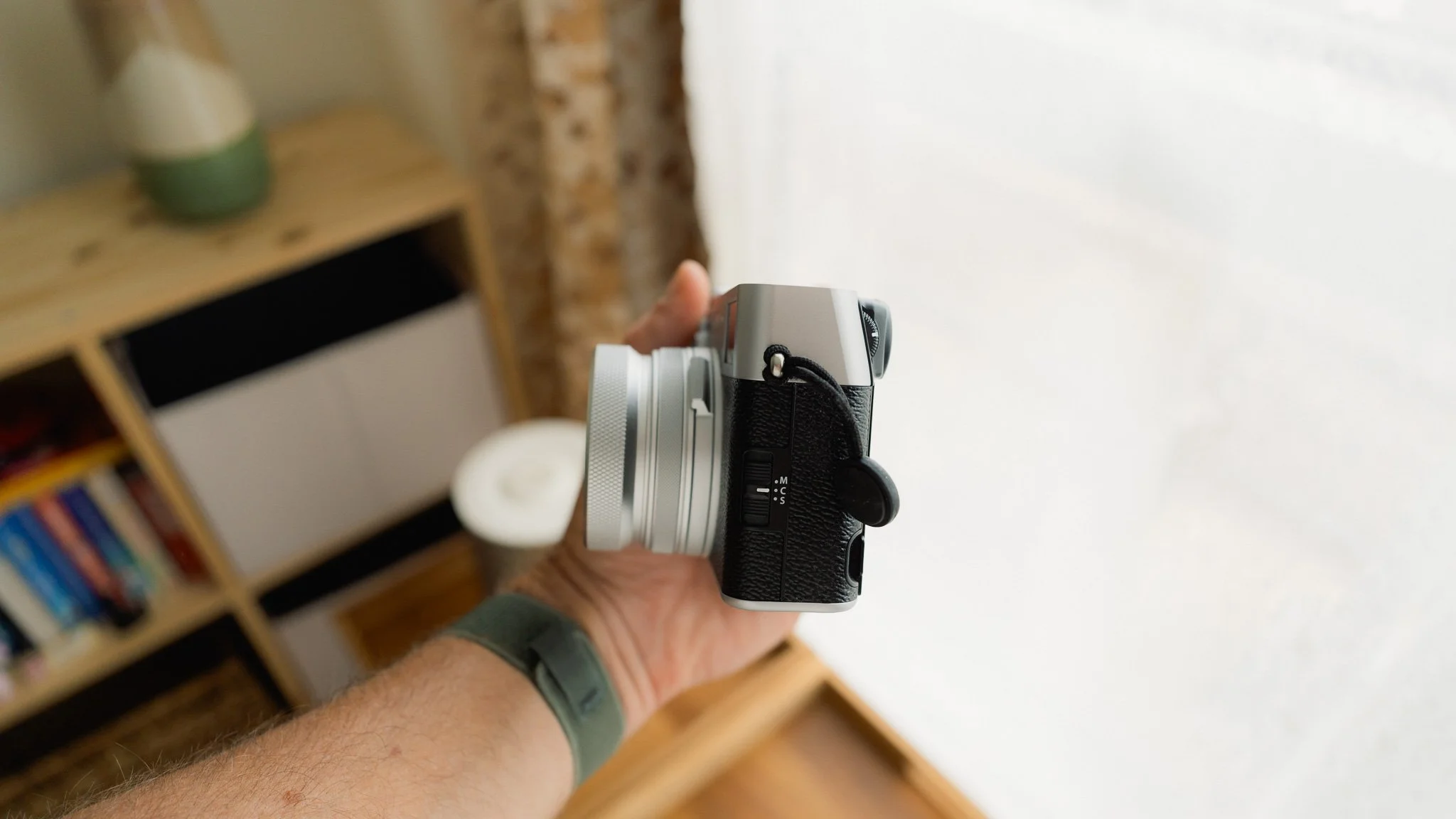
Ergonomics
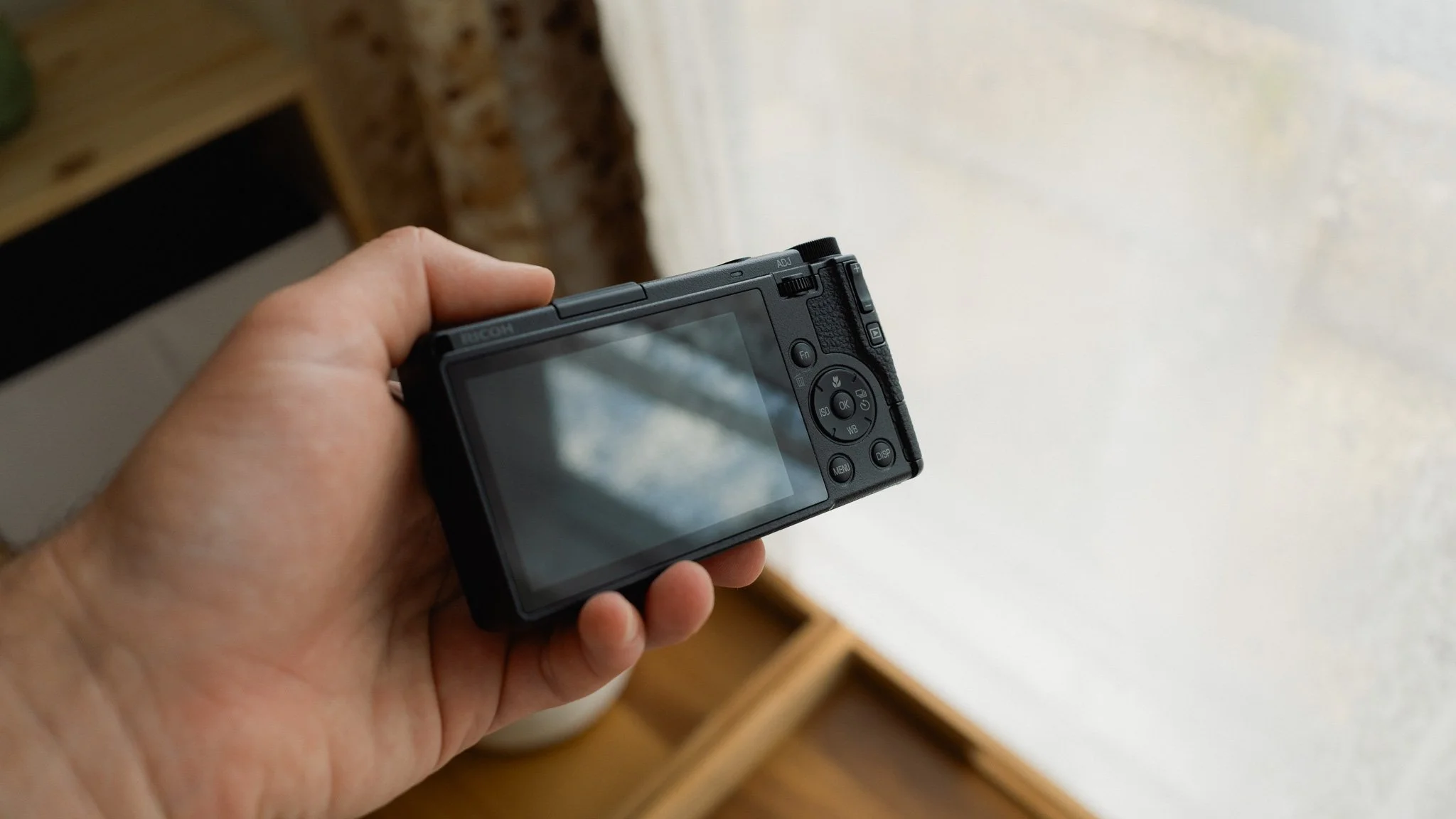
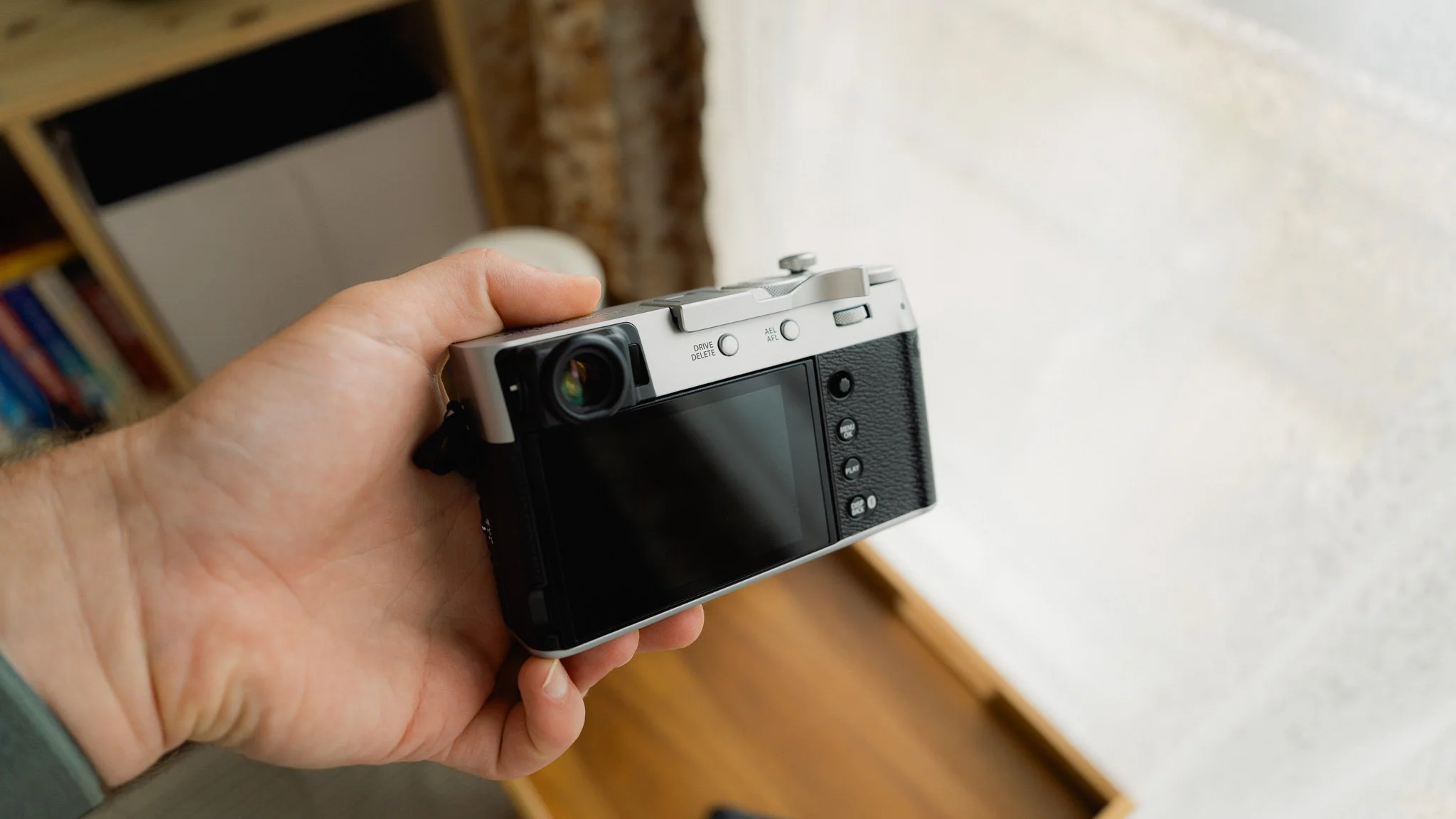
This will depend heavily on the size of your hands and what you prefer. I personally prefer the ergonomics of the Ricoh because of the grip and light weight. With the X100VI, I feel like I have to squeeze it in order to not drop it. Adding a small thumb grip does go a long way to remove this issue. I find both cameras are very comfortable to use for longer periods of time, and I can’t really fault any of them given the size. If I had to pick a winner, I would say the Ricoh, because I don’t need extra grips to find it comfortable.
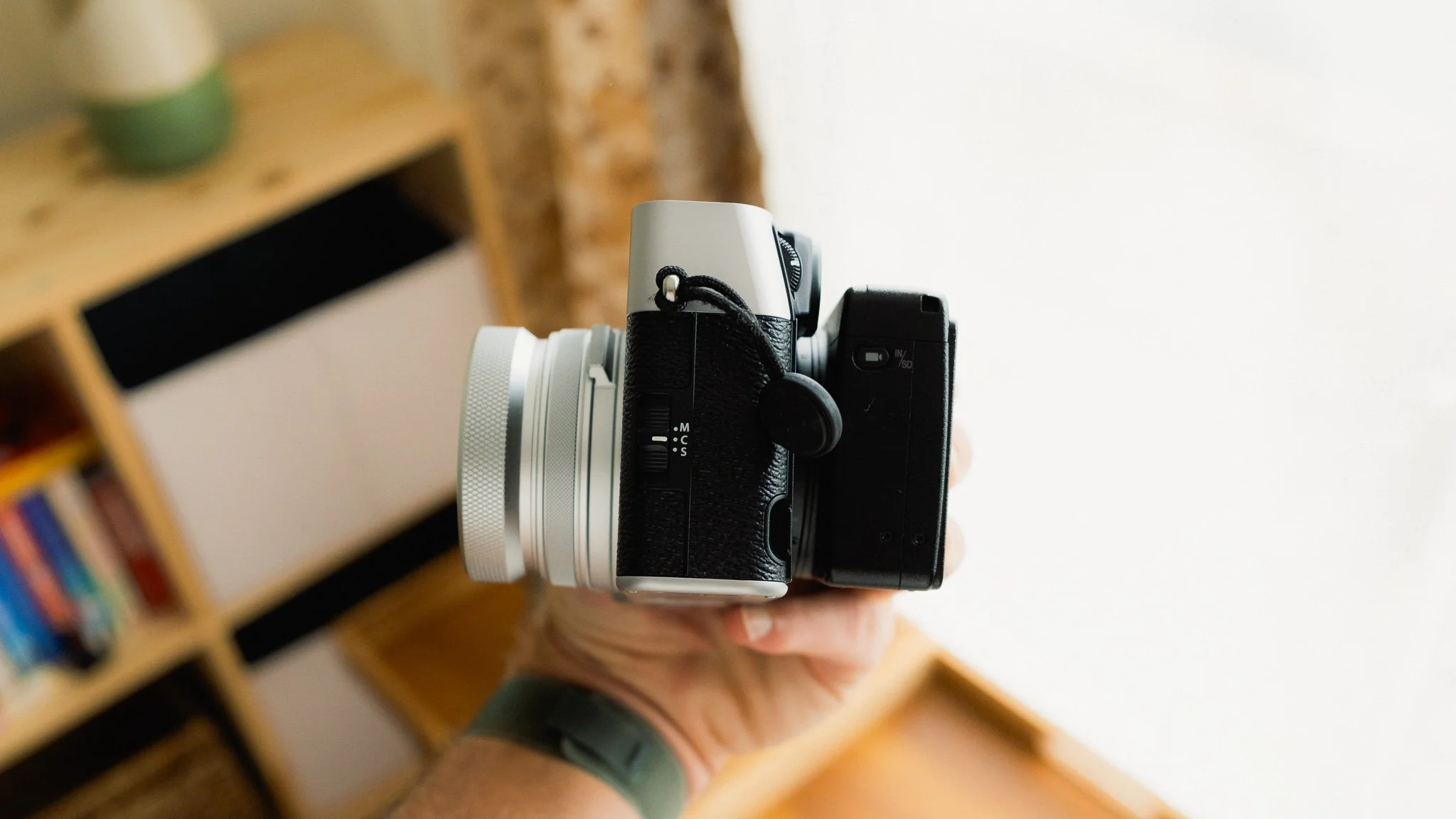
Buttons / Dials
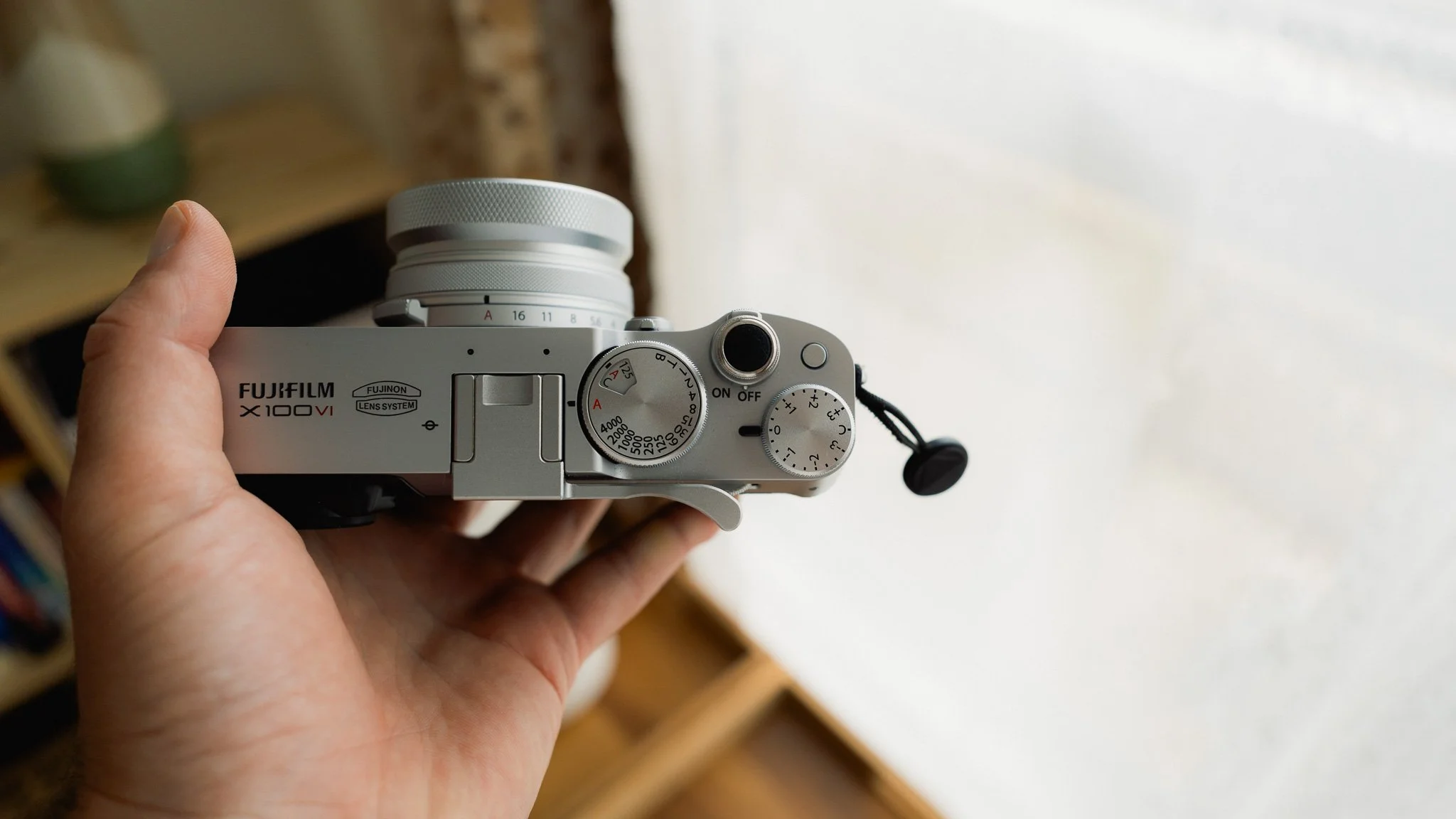
The two cameras have a very different approach and this is where personal preference will determine what’s better for you. The Ricoh uses a traditional system with a mode dial and three custom settings. The Fuji comes with dedicated aperture, ISO, exposure, and shutter speed dials. If you prefer that classic hands-on approach, then the Fuji is the clear winner. If you would rather have a more modern and minimal way of shooting, then I’d go for the Ricoh.
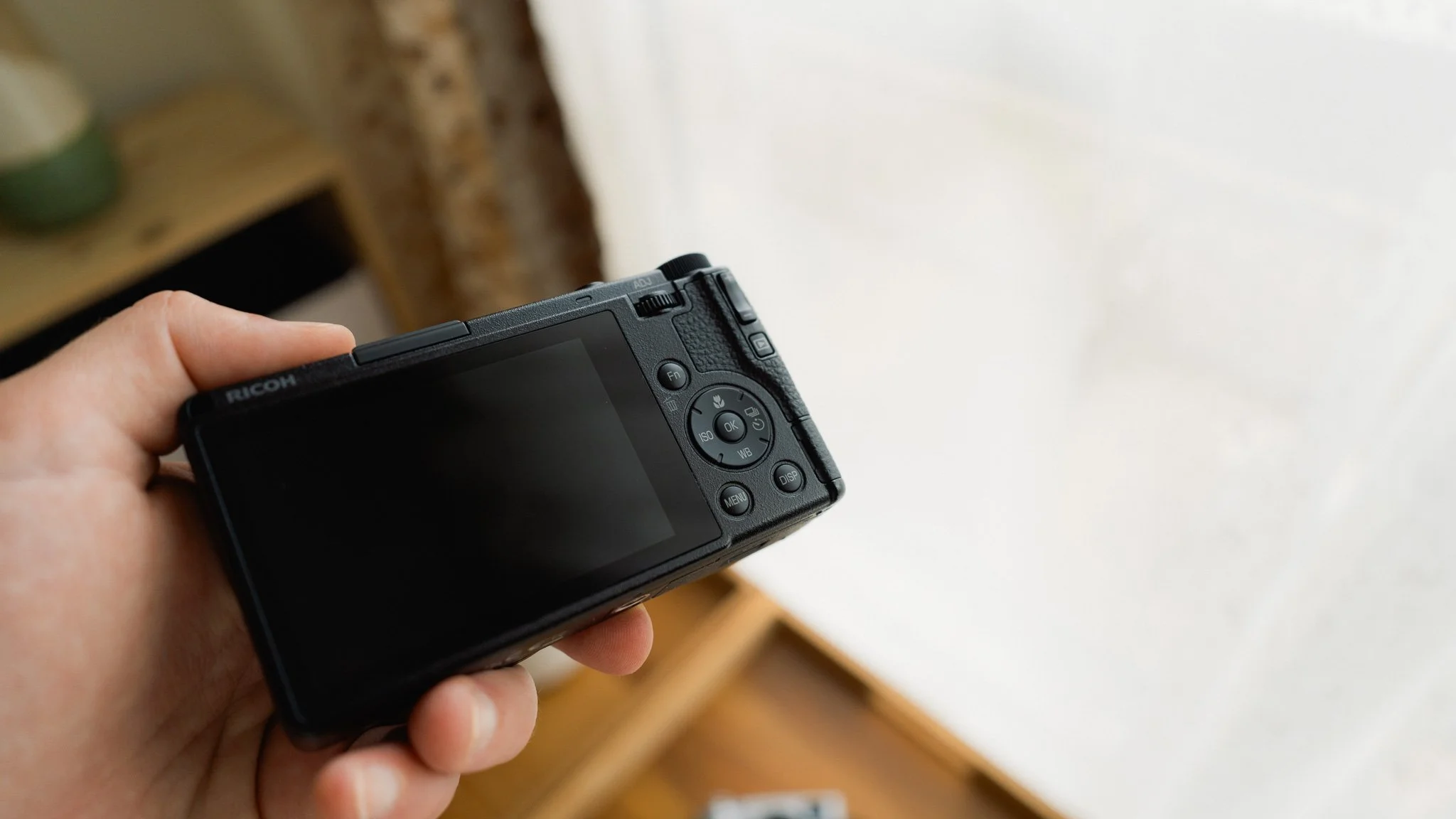
Other than that, the Fuji has more custom buttons, a joystick, and dedicated controls for the focusing system. If you prefer to have more physical controls, the X100VI is the camera for you. On the other hand, the mode dial on the Ricoh is incredibly useful, especially when it comes to quickly switching between entire camera setups.
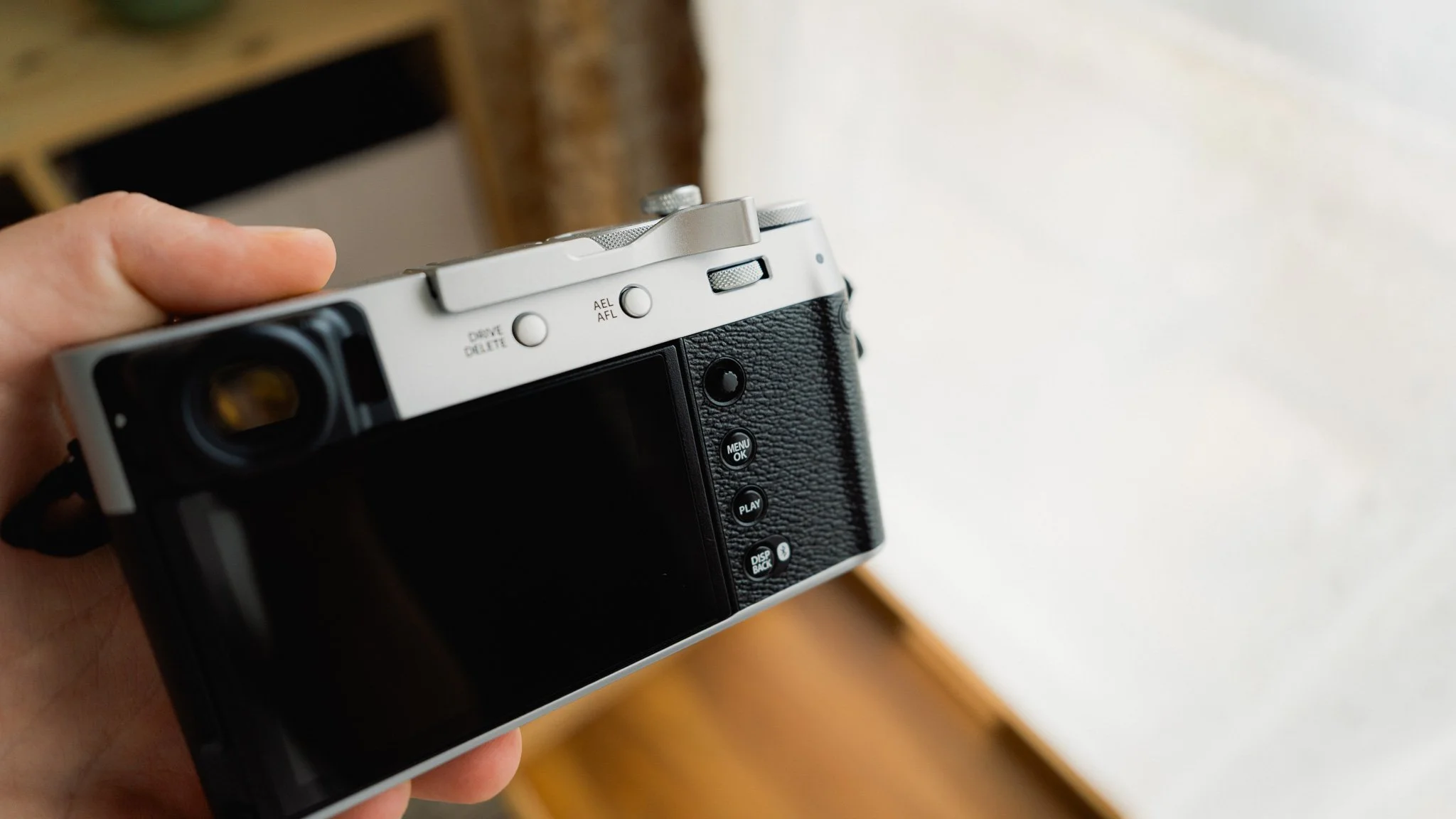
Screen & Viewfinder
The Fuji wins this one hands down. You have an EVF, OVF, and a tilting screen. The Ricoh only has a fixed screen. For many people, this alone will be a decision-making difference. I can’t say what is better or worse as this is subjective, however I can’t possibly imagine using the Ricoh with a viewfinder due to the small size. Given the screen-to-body ratio, I would also imagine a tilting screen on the Ricoh to be more of an annoyance than a benefit.
Performance
Both cameras perform extremely well. They boot up instantly, there is no lag, navigating the menu system is fluid, and they work as they should. I do find the Fuji takes longer to write files, however that’s due to the resolution difference, and the fact that the Ricoh has internal storage good for over 900 RAW photos. If you run out of space, you can insert a Micro SD card and carry on shooting. Both cameras have average battery life and last about the same. I would say the Fuji can last a little longer as long as you don’t use video.
Photography Features
Both come with plenty of features that will improve your photography experience, however the Fuji is ahead here. First of all, the X100VI has a built-in flash which the Ricoh does not. The flash is great if you’re taking photos of your holiday, family, friends, or shooting in dimly lit environments. The Fuji has IBIS which is very good, and while the Ricoh is also stabilised, it’s not as effective. While the Ricoh has a bunch of picture profiles, I still find Fuji to be the class leader in JPEG profiles. If you don’t want to edit RAW photos, the Fuji is the clear winner. The Fuji opens up to f2, while the Ricoh is limited to f2.8. This makes the Fuji better for low light shooting.
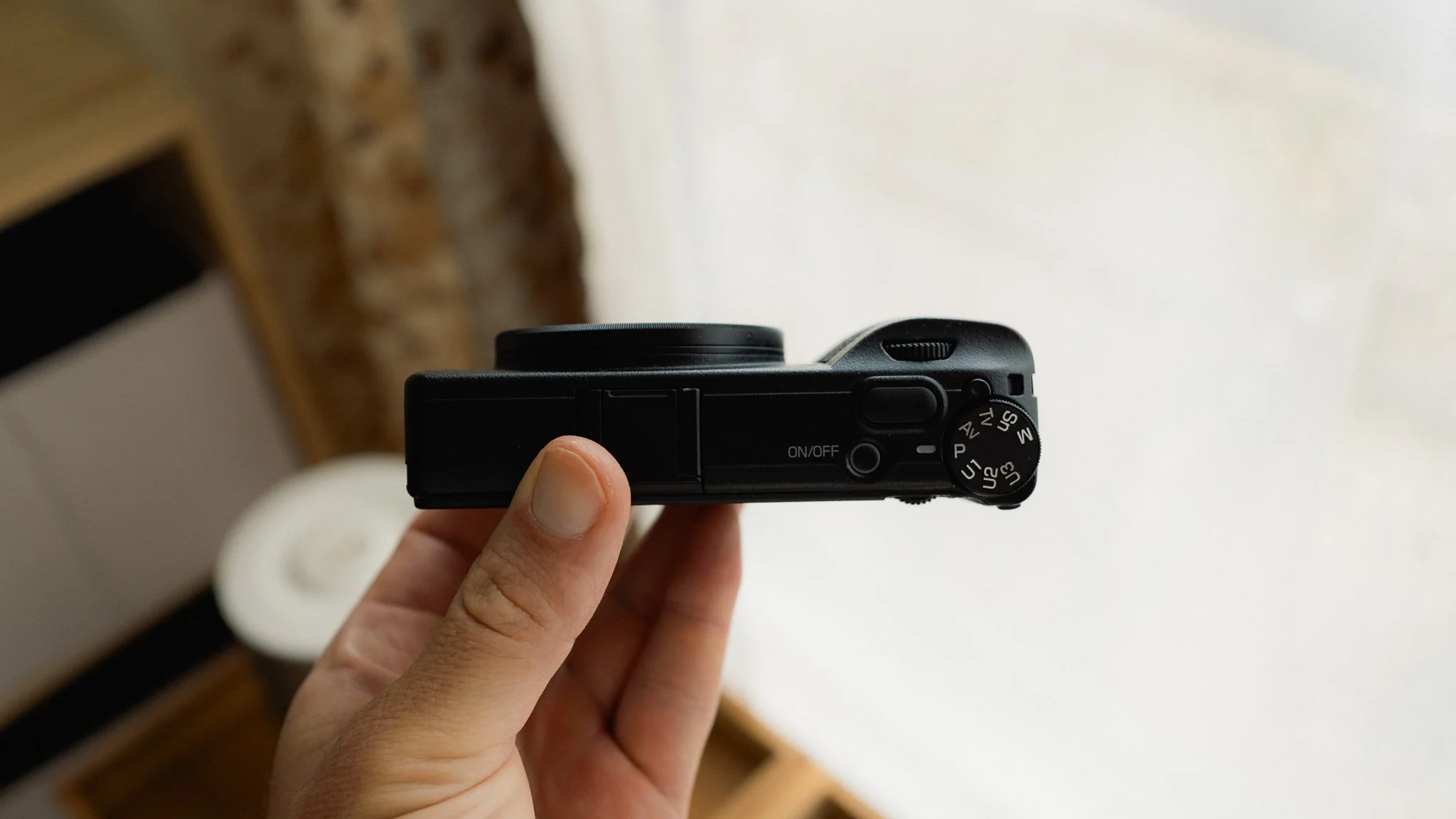
However, this isn’t a clear win for the Fuji because the Ricoh has two unique features. Macro mode extends the lens out and allows you to focus on close detail. Snap focus allows you to set a specific distance, and at a push of a button have the camera focus and lock to that distance. Both of these features I use all the time on the Ricoh. Both cameras have a built-in ND filter, which is extremely useful for slow shutter speed work on sunny days.
Autofocus
The Fuji wins this hands down. It has a superior AF system in every way. It’s faster, quieter, and more reliable. There really isn’t any contest here in my opinion. Don’t get me wrong, the system in the Ricoh is fine, but in comparison to the X100VI, it’s not as complete.
Manual Focus
Another easy win for the Fuji because you have a dedicated focus dial. The Ricoh requires a very awkward implementation of custom buttons to focus manually. It’s so bad, that it’s almost useless.
Image Quality
Both cameras have an APS-C sensor and overall both produce great images. The Fuji however is ahead here for many reasons. First of all, you have more resolution (40MP). I also find the images to have better highlight roll-off, and an overall softer look. The Ricoh files can appear a little too digital at times. Both cameras have great colour science, but if you want a more neutral starting point, the Ricoh is a good choice. Even if shooting RAW, the X100 always has that Fuji look. For most people that’s a selling point, but if you’re not into that aesthetic, then it can be annoying. Overall I like both equally, and this isn’t a deciding factor for me at all.
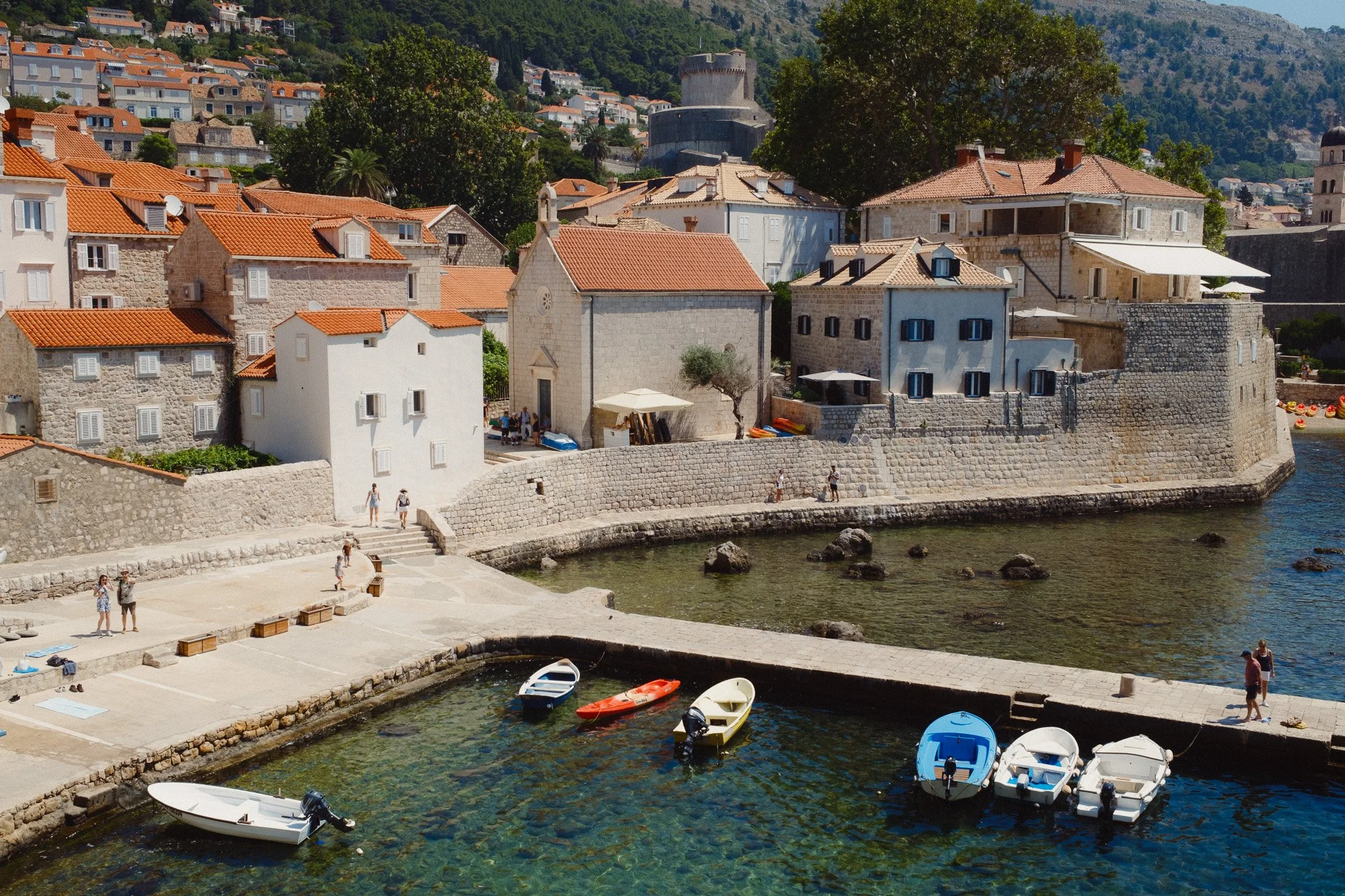
Below are some photos taken on the Ricoh.



Below are some photos taken on the Fuji.


Video
No contest here at all as the Fuji wins this hands down. The video feature in the Ricoh feels like an afterthought, while in the X100 it feels like a properly thought-out part of the camera. The X100 can be used for actual video work. The Fuji has solid IBIS, Log profile, HDMI / audio inputs, dedicated controls, 6K video, and a ton of video-specific settings. The Ricoh has none of that.
Summary / Recommendations
Both of these cameras are great and have their specific use cases. I also think people will buy them for very different reasons, and while many see them as competitors, I personally don’t think they are fighting for the same spot.
If you want the most feature-packed camera, the clear winner is the Fuji X100VI. If this is going to be your one and only system, then the Fuji is the best choice.
If you already own a bigger system, but want something pocketable for everyday carry, then that’s where the Ricoh comes in. It might not be as advanced as the Fuji, but the best camera is the one you have with you.

Instead of telling you how these will change your life, I would rather be practical and answer the most common questions that people tend to have when buying presets.
What are presets?
They are editing settings that are saved in a file and can be applied to any image.
Why do people buy presets?
Sometimes because they like the work of the photographer and want that style for their own photos. Mostly because they would like to see how other people edit and learn by reverse engineering the presets. Other times it’s just to support their favourite photographers, thank you!
What’s the overall style of these presets?
- Filmic
- Warm
- Soft
- Bright
What are these presets suitable for?
Street & Travel Photography
Some Nature (with further editing)
Some Portraits (with extensive editing)
Do I actually use these?
Yes. This is the same pack I use right now for all my editing. This isn’t a pack made just to sell.
Do these presets get updated?
Yes, as my style changes, these presets will also be updated. Any time a new update is available, you will get a free update via email. Of course you also keep all the old presets in case you prefer the older looks. Only presets purchased from 2025 onwards will receive the updates.
What file types are these presets for?
- All RAW files
- JPEGs & TIFFs (not recommended)
What camera brands are these presets for?
These were designed around Fujifilm, Sony, and Leica sensors. With that said, they will work with all camera brands. While there might be differences due to individual camera colour science, the overall feel of the preset will carry over.
Will these work with JPEG files?
Yes, but you will need to reduce the intensity and make further edits. I strongly recommend editing RAW files.
Are these one click edits?
95% No. You would need to do some basic adjustments as each image is different. These adjustments can include exposure, colour balance etc. In 5% of cases you can just apply and leave it alone.
Do I need to know how to edit?
You need to have a basic understanding of adjusting exposure, highlights, shadows, etc. A more comprehensive editing skillset will let you get the most out of them.
How many presets are included?
10 in the main pack and 24 in the extras pack
Why two packs?
The main pack is what I use for 99% of my edits and is kept small to reduce wasted time scrolling through presets. The extras pack is everything I don’t use often.
What software do I need?
These presets will work with any of the following:
- Photoshop (adobe camera raw)
- Lightroom Classic
- Lightroom Desktop
- Lightroom Mobile
Will these presets work with free versions of the above software?
You need to research and double check before buying. These presets were designed for the full paid versions.
Will these presets work with very old versions of the above software?
You need to research and double check before buying. These presets were designed on and for the latest software.
What file type do I get?
XMP
What else do I get?
- Comprehensive PDF guide
Can I modify these and turn them into my own?
Yes! In fact I encourage you to modify them and play around. Use these to help you get your own style.
I have more questions…. What do I do?
Make a cup of tea and drop me an email on hello@snapsbyfox.com
Please note that due to the nature of digital products, refunds are generally not accepted. However, if you experience any issues, feel free to contact me and I’ll review your situation individually. You are welcome to use this product for personal or commercial projects, but you may not copy, distribute, or resell the files in their original or modified form.
Finally I want to say a massive thank you for supporting me. Buying these presets is the most direct way you can support my work.
Thank you!