
Photography In Antarctica - My Experience
Earlier this winter I got the incredible opportunity to travel to Antarctica. I feel insanely lucky and privileged to experience something like this, and in this blog I will share my account of this trip. I will share all the details including getting there, companies used, gear choices, lessons, mistakes, and my overall experience. The goal of this blog is to hopefully give you a better idea of what to expect should you find yourself in an equally lucky position of visiting Antarctica.
How this came about
About a year prior to the journey, James Popsys, a good friend of mine, invited me to join the photography leaders on an Antarctica photography workshop. James, Nigel Danson, Jeroen Van Nieuwenhove, and Mads Peter Iversen have been running photography workshops in the most random parts of the world for a long time, and for their third Antarctica trip, they wanted to include me, a street photographer, in the mix. This wasn’t a holiday, as I had to always be around to assist guests with camera, editing, and general photography questions, however I had the majority of my time to also get some great shots.
Companies used
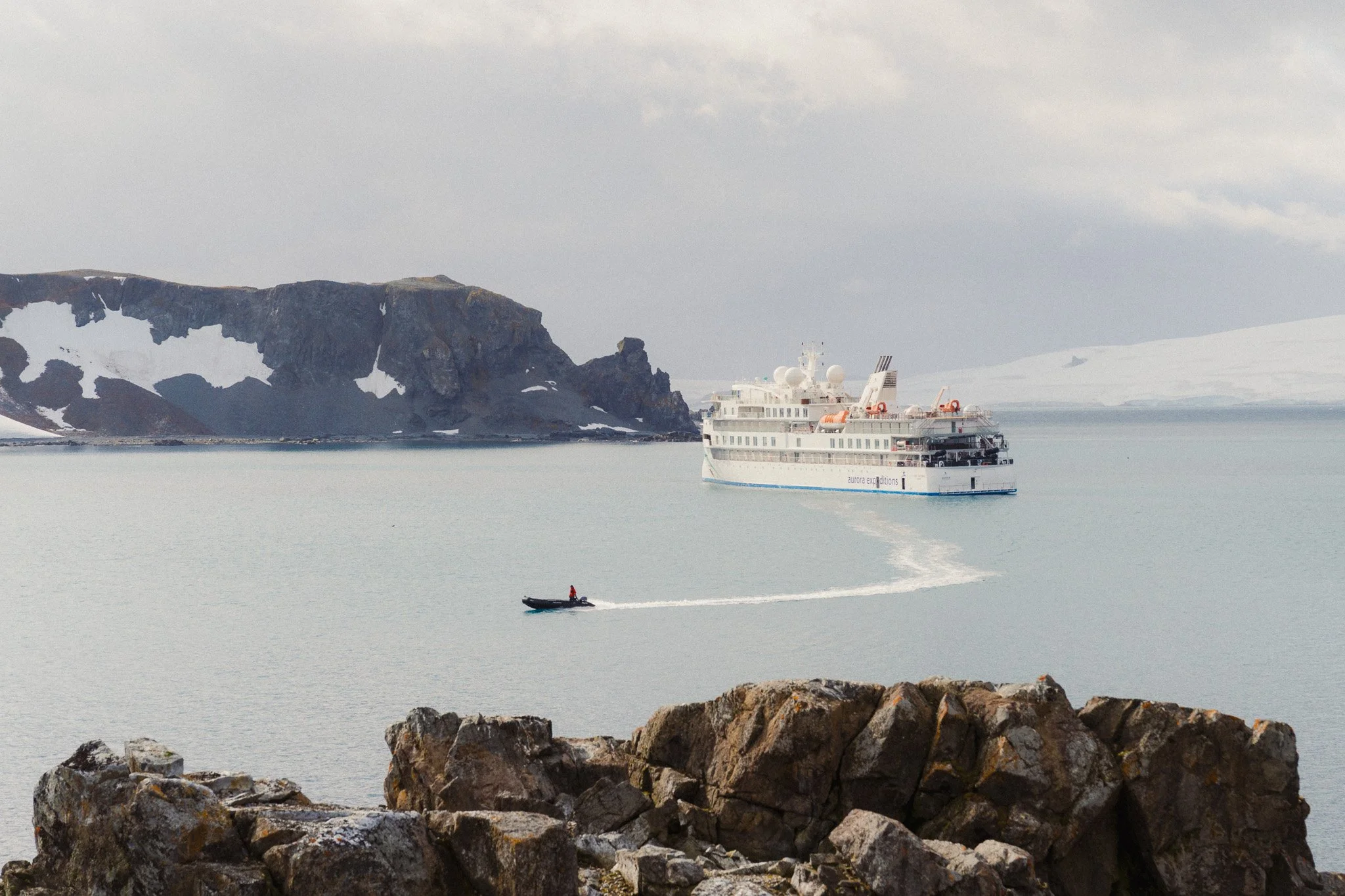
The cruise company we used was called Aurora Expedition. The photography workshop info can be found at the bottom of the blog. For full transparency, I did not get paid by any company, however I got the trip and most of the costs covered by Nigel and the team. There are other companies that do these tours with varying levels of service. Some only do the cruise with no possibility to leave the ship. Others do not follow certain protocols and can bend the rules around what you can do and where you can do it. Given this is probably the most remote place in the world, your safety is 100% in the hands of the crew. With that in mind, I would rather not cheap out or use cowboys who cut corners.
Getting there and back
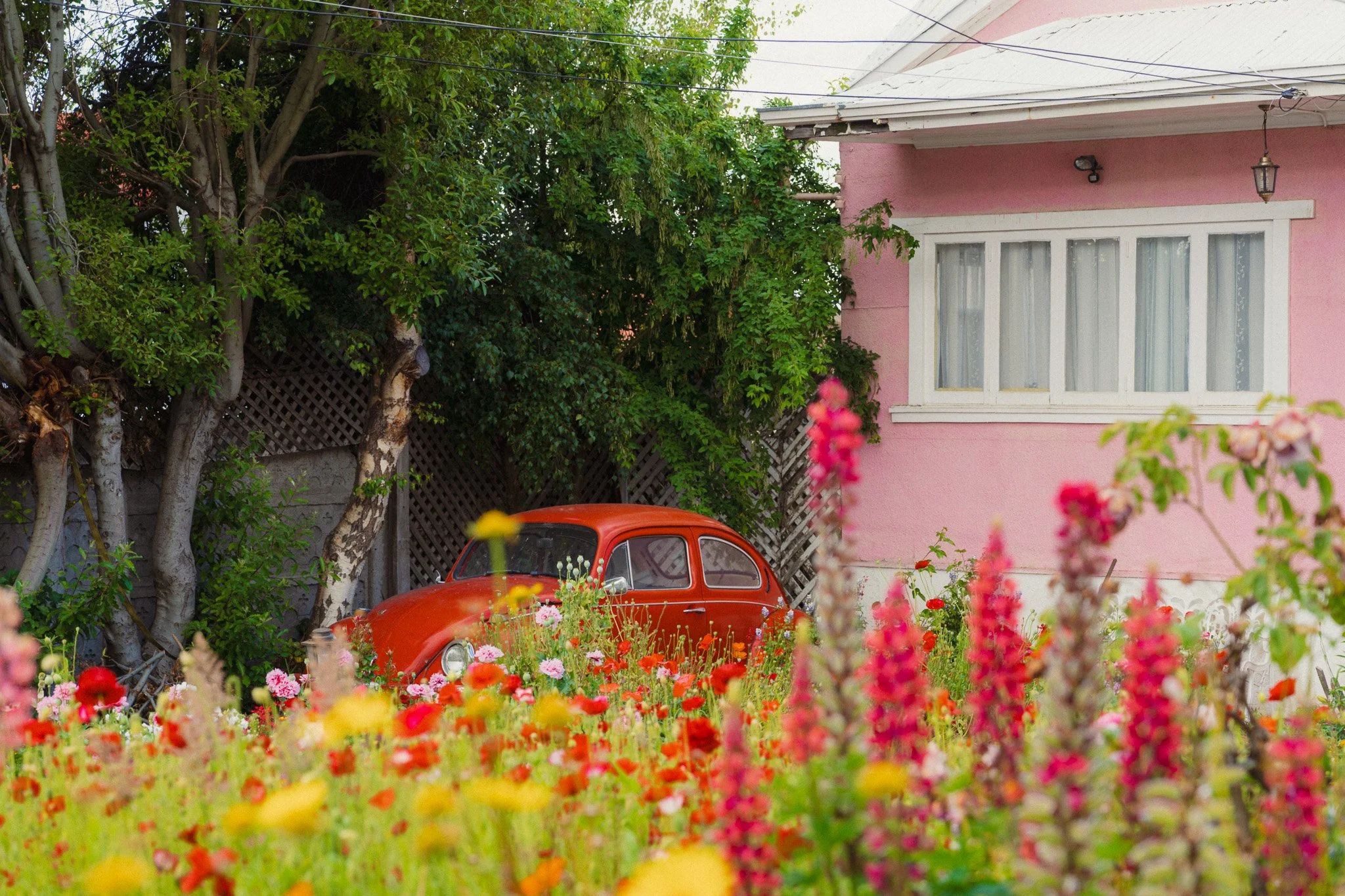
This can be seen as a positive or a negative, but either way, getting there is an adventure in itself. The first leg included a flight to Santiago in Chile, followed by an internal flight to Punta Arenas. This small town acts as a hub for people going to Antarctica and, in hindsight, I would have planned to have an extra two free days in both Santiago and Punta Arenas. Not only would this have broken up the travel, but it would have given me more opportunities to shoot in new places.
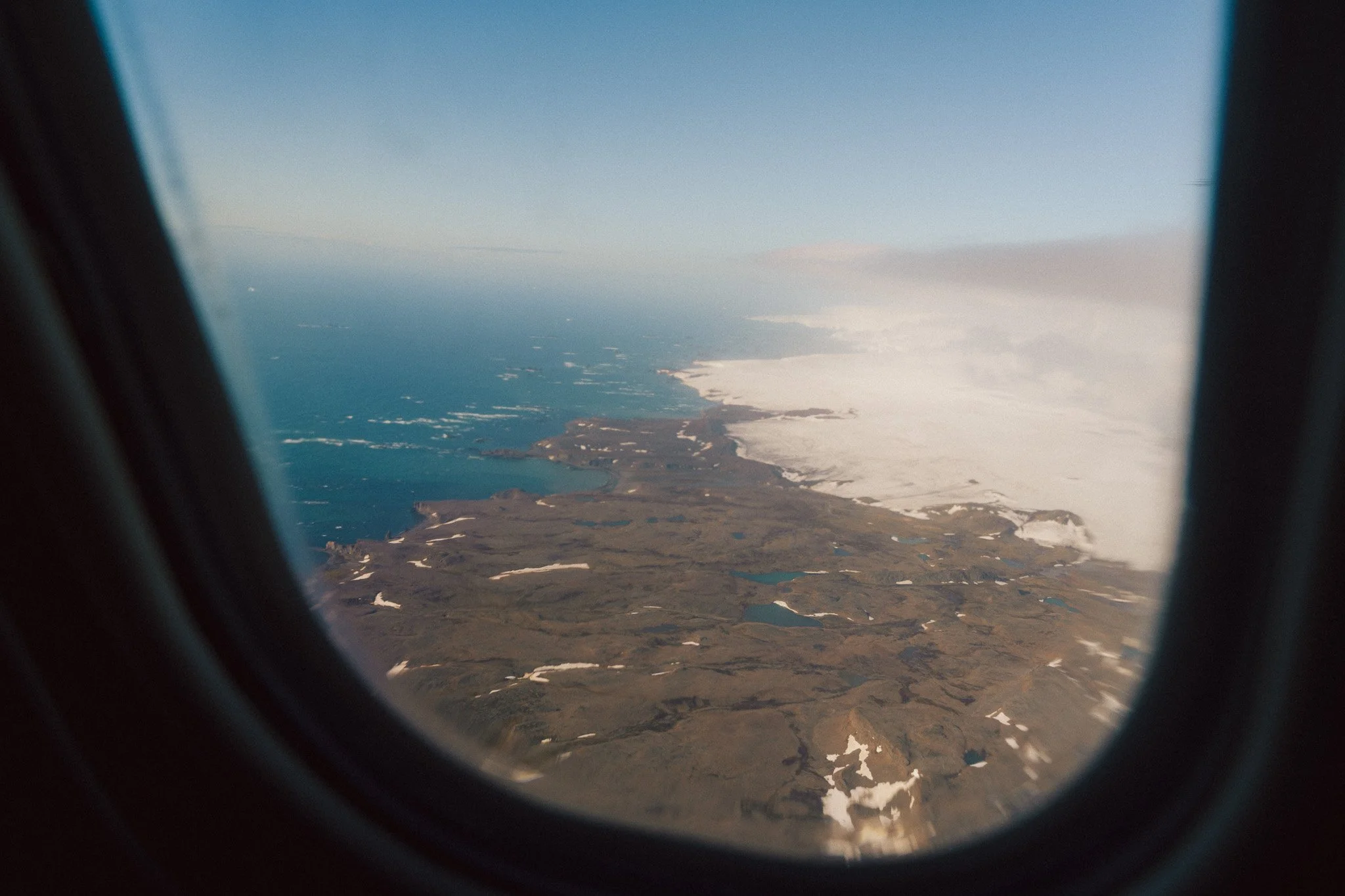
From Punta Arenas we took a 3 hour flight straight to King George Island in Antarctica. If the weather is good and your schedule aligns, I highly recommend flying over sailing the Drake Passage. Once we landed on the gravel runway, it was a quick bus ride to the zodiacs that took us onboard the cruise ship.
Our return was a little different as the ship had to be back in Ushuaia, Argentina, for its next voyage. Sadly, this meant crossing the Drake Passage, which can only be described as 3 days of hell. Our crossing wasn’t even that bad, a mere 3/10 on the craziness scale, yet I was confined to my bed unable to look at anything without wanting to throw up. For some people it wasn’t an issue at all, for me it was bad enough to render me useless.
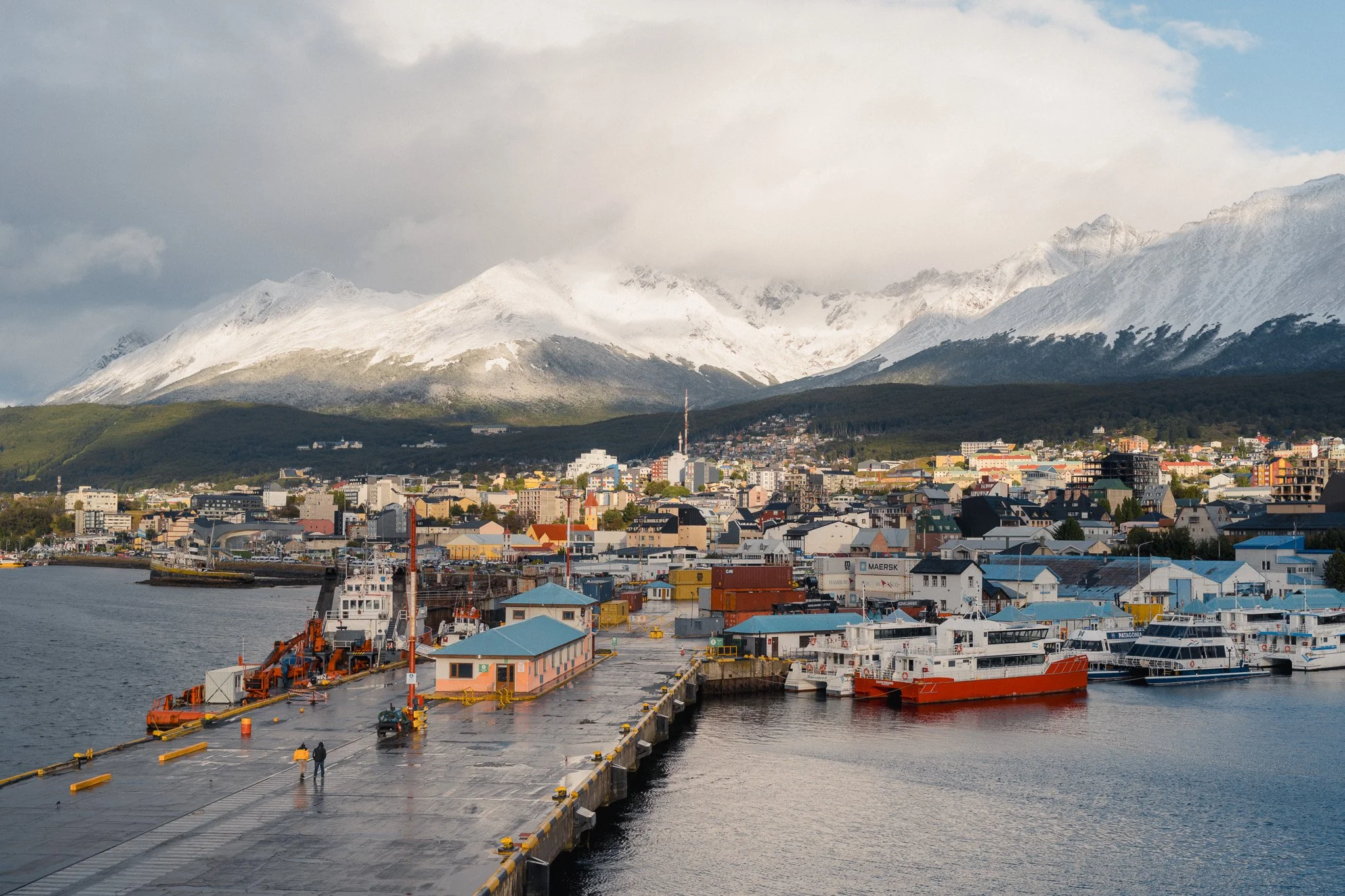
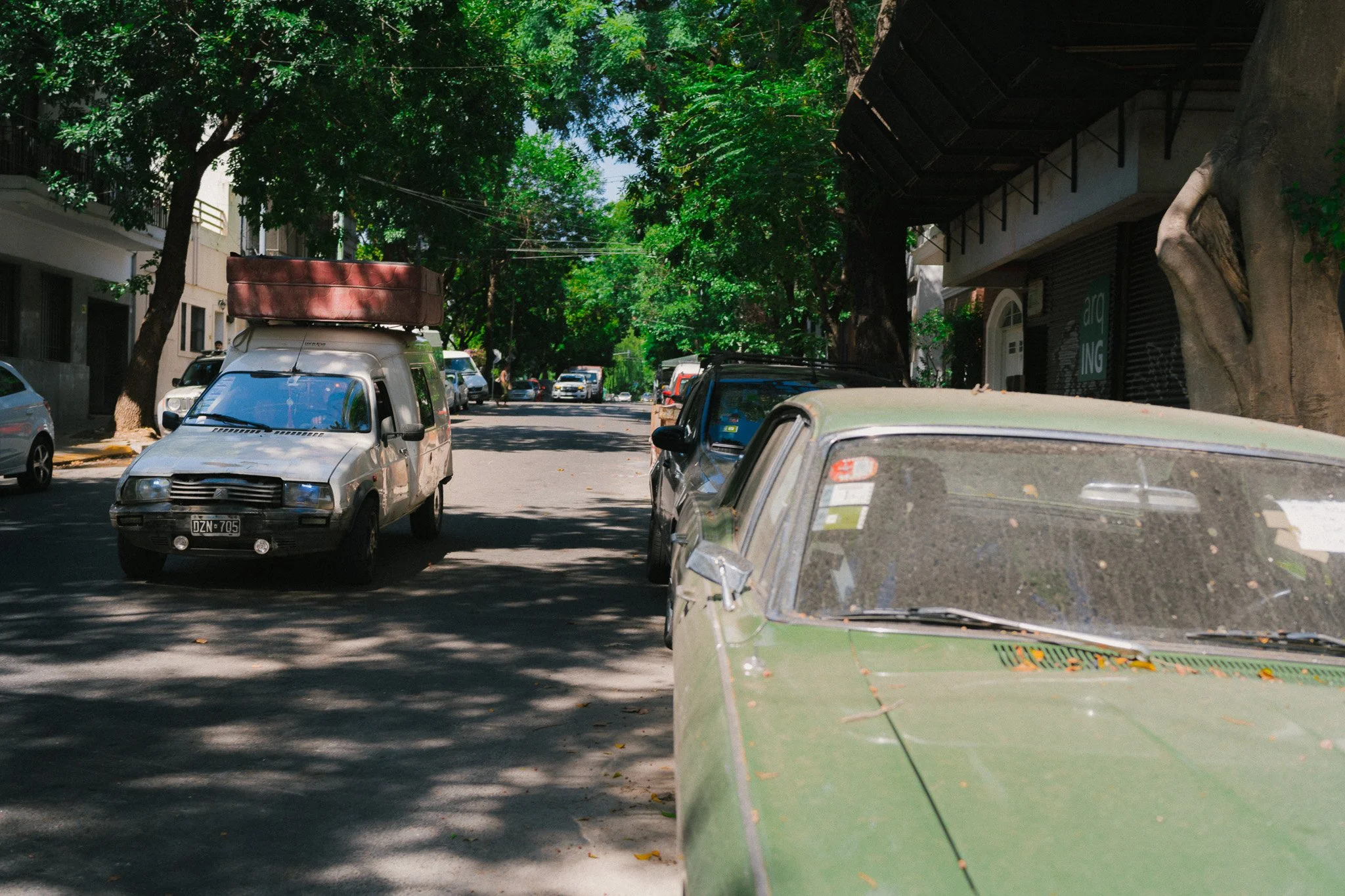
We then spent a few hours in Ushuaia before flying to Buenos Aires for our final leg home. We also had half a day in the Argentinian capital, and in hindsight, I wish we would have left Ushuaia a day earlier. I personally didn’t find Ushuaia that interesting, however Buenos Aires was great.
Weather
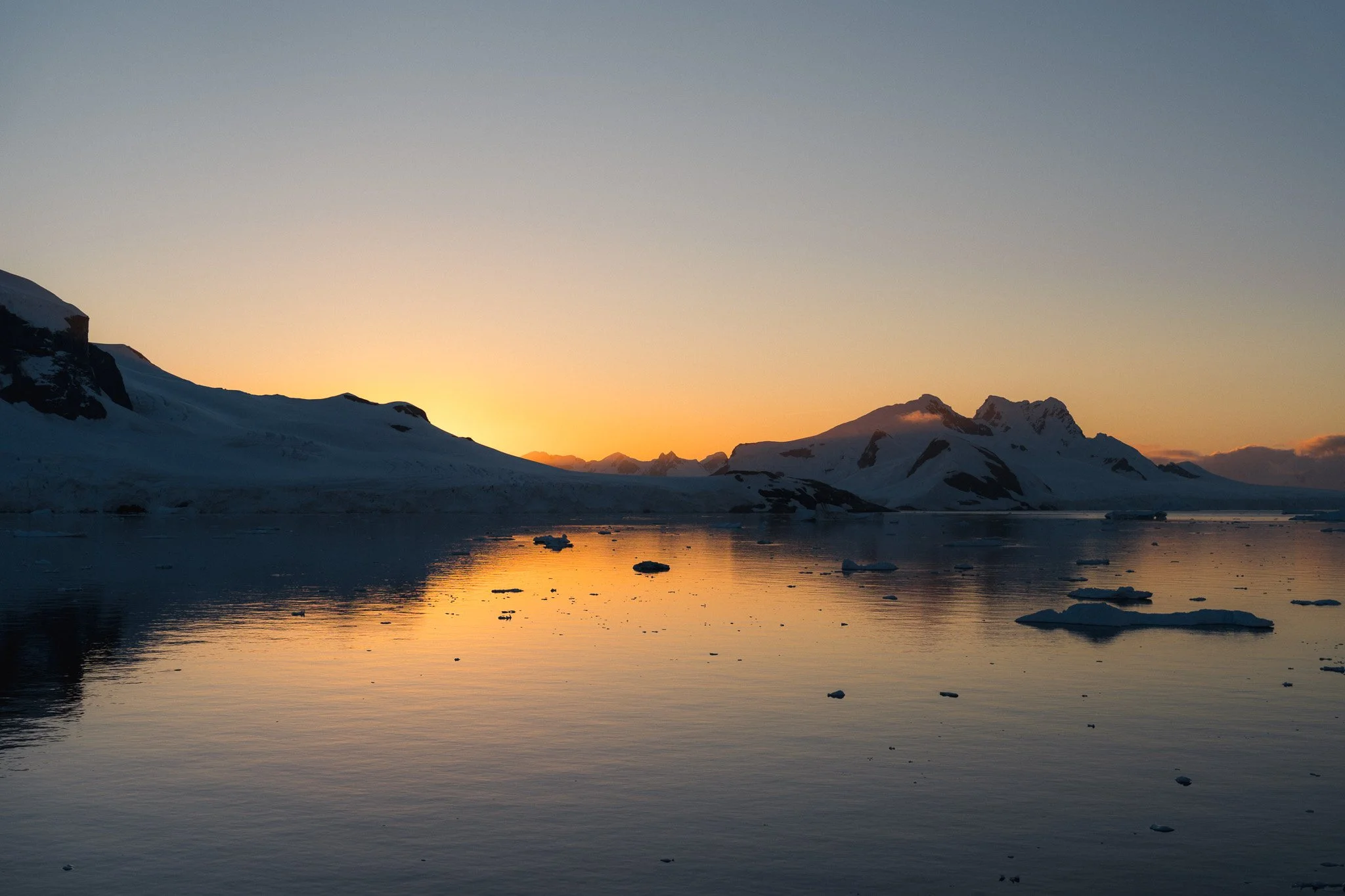
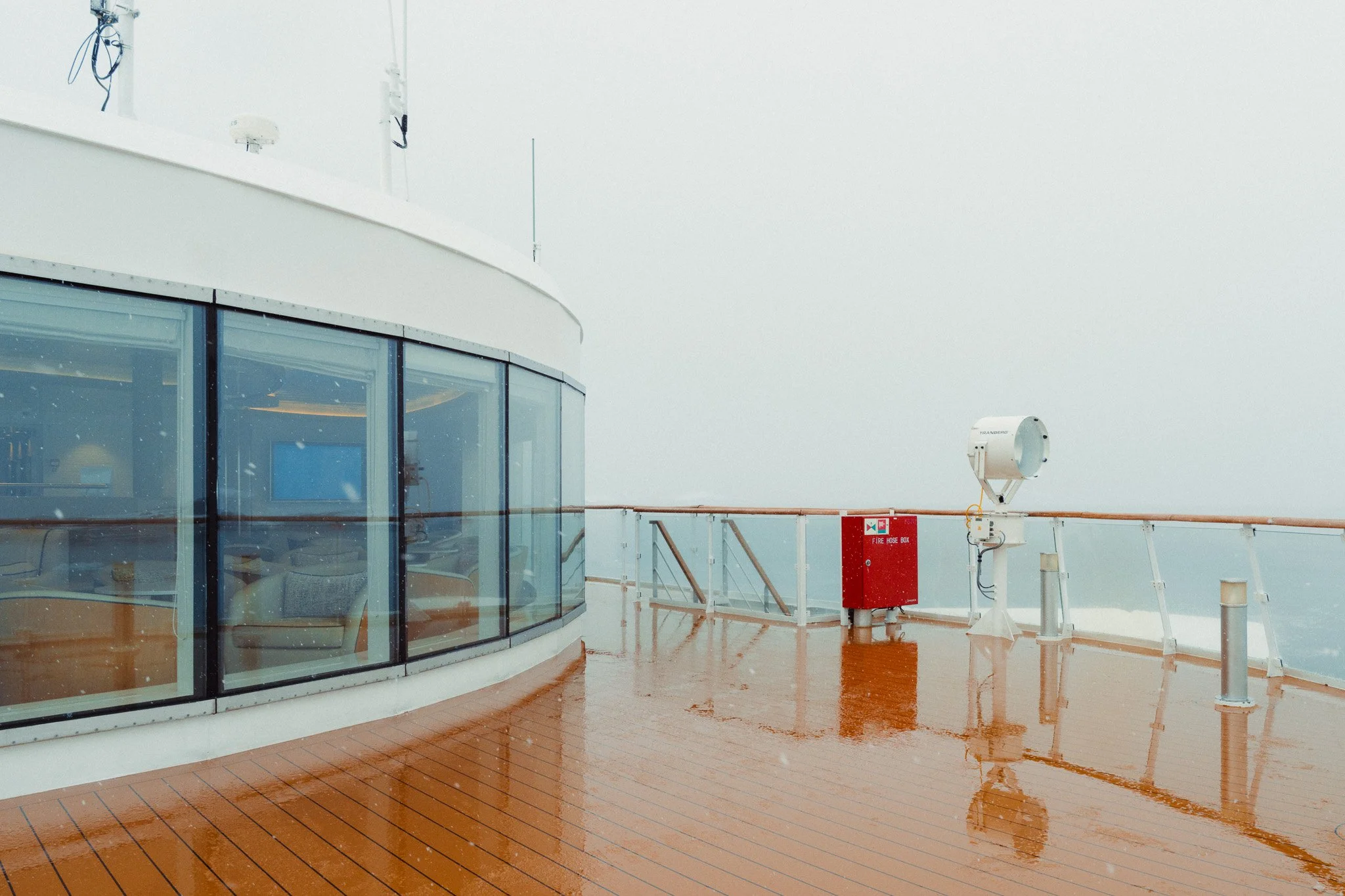
This could be a whole blog on its own, however I will keep it short. We visited in February, which is their summer, therefore the temperatures were mild and the sea not frozen over. The two capital cities were very warm. Ushuaia and Punta Arenas were a little fresh. Antarctica was, as expected, much colder and rather unpredictable. We had clear skies and glass like water. We also had extremely strong gusts, choppy sea, and snow. Temperatures were around freezing, however it felt a little colder due to the wind. The only constant is sudden change, so you have to be prepared for everything to flip in a short space of time.
Limitations
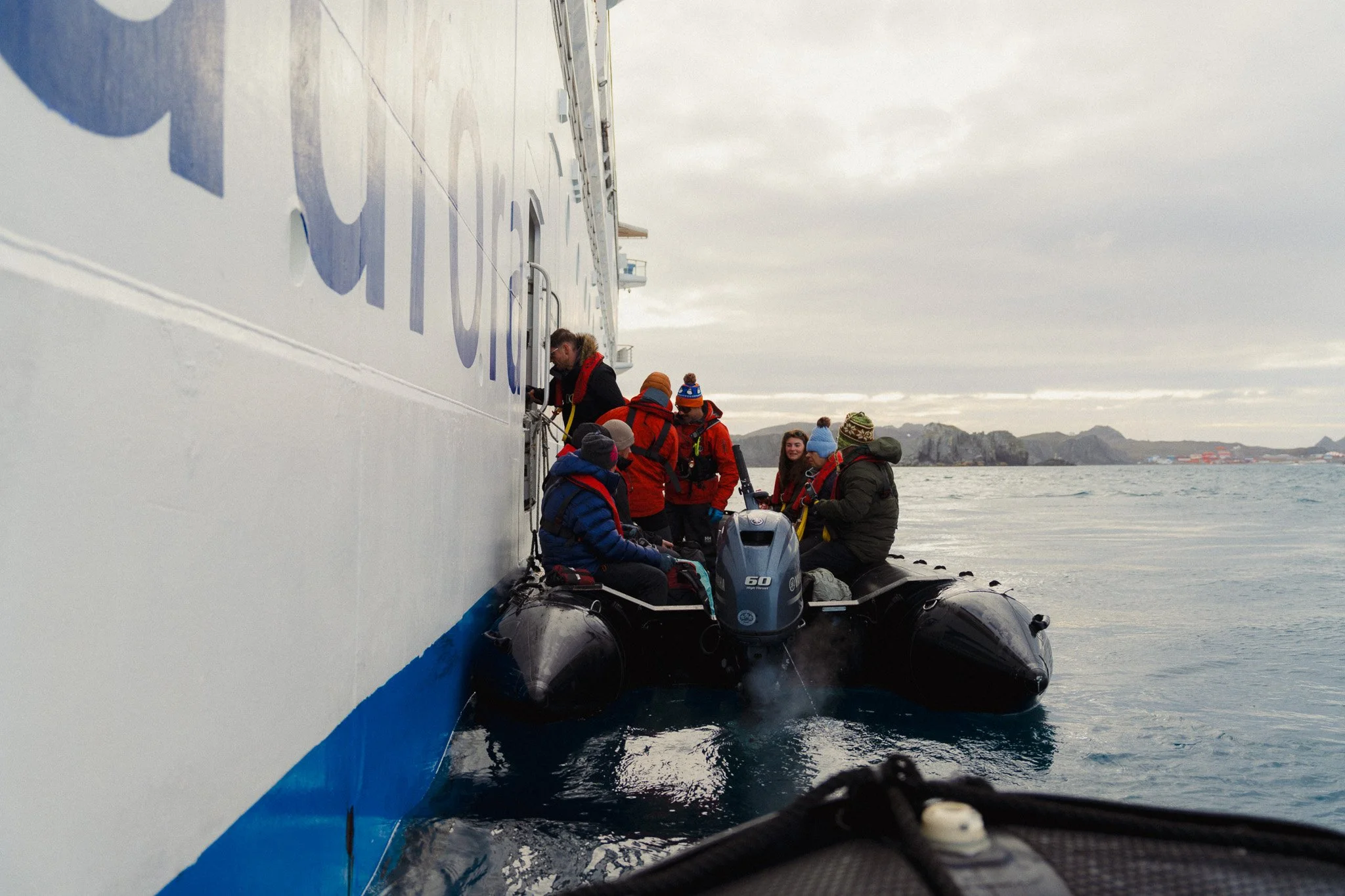
Unlike most other locations you visit, you can’t simply hop out and go for a wander. Most of the time you will be on the ship, and when suitable, you will have zodiac landings. Zodiacs are the small military style boats that take you from the ship to the various islands or even the mainland. Assuming there is a safe landing area, you can get off and explore. However that is also heavily restricted in order to not disturb the wildlife, or worse still end up going somewhere you might need rescuing from. All the landing sites were carefully examined and patrolled by the Expedition team from Aurora.
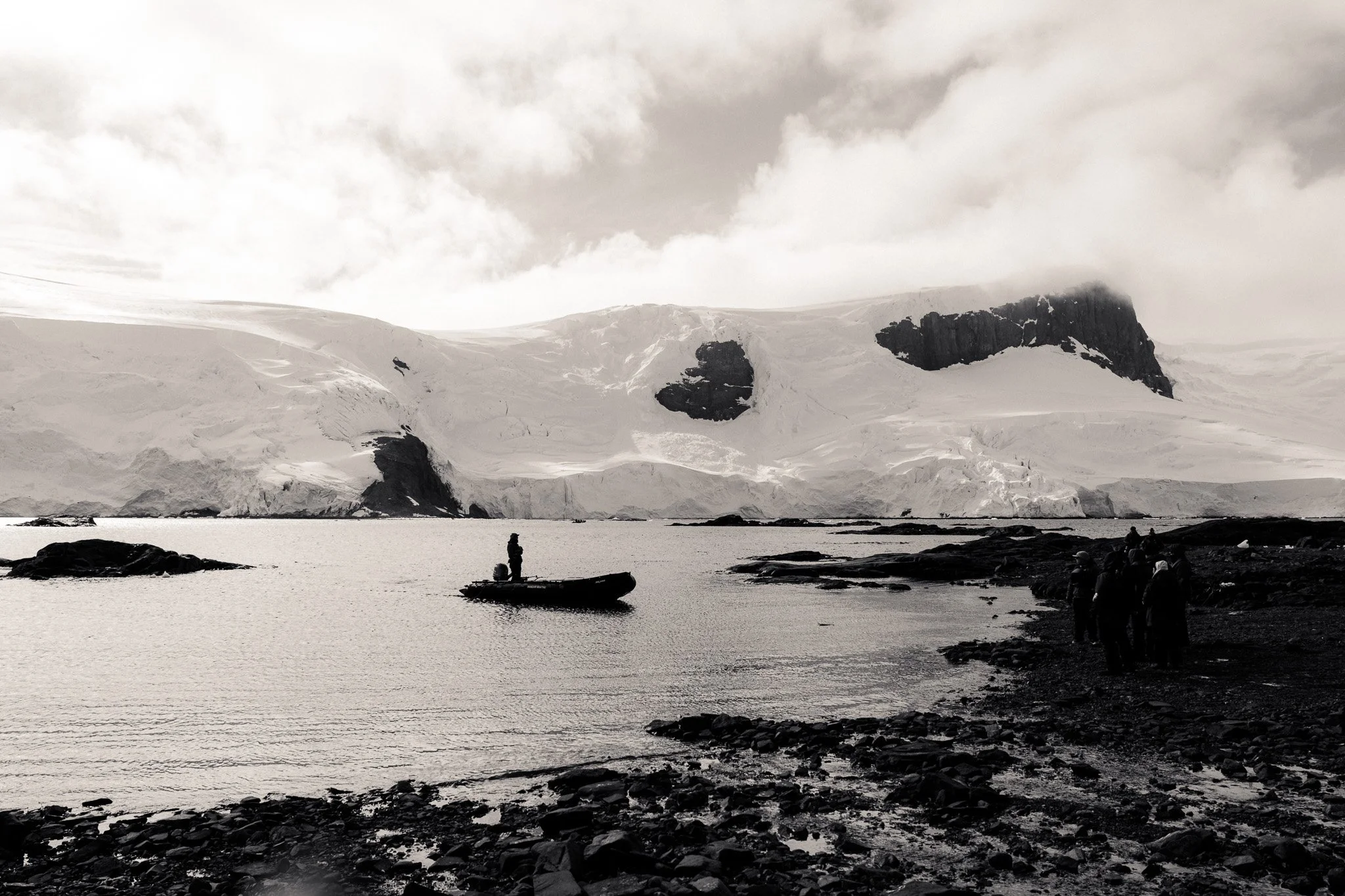
Further limitations included not being able to sit anywhere, lay your bag down, get too close to penguins, or take anything back with you. There is a lot of concern around spreading diseases, or bringing something back with you. If you’re the type who likes to do your own thing, not follow a schedule, and not have someone tell you what you can do and when you can do it, then this trip is certainly not for you. I joke, but at times it definitely felt like a school trip.
What To Pack
As with all my packing advice, less is more! Below is my full kit that I took on this trip:
40L travel backpack (carry on)
10L sling
iPad Pro
Sony A7RV + 24-70 f2.8 (main system)
Sony A7CR + 40mm f2.5 pancake (backup + street photography in cities… this camera was always on me)
Charger + batteries
2 x USB-C wall plugs
4TB SSD for backup
Spare pair of wired headphones
4 x USB-C cables
Dongle for iPad (to connect to HDMI etc)
ND + CPL filter
Cross body camera strap
First aid kit
Toiletry / shaving kit
5 x T shirts
2 x jumpers
2 x trousers
1 x shorts
1 x warm waterproof coat
1 x waterproof bottoms
2 x thermals (top and bottom)
7 x socks
7 x pants
1 x hat, gloves, scarf
2 x trainers (we were given specific boots for landings)
Sunglasses
Sunscreen
I’m sure I missed some small bits off the list, but that was everything. At no point did I run out of clothes, as there was fast laundry at each hotel and on the ship. The only thing I would have changed is to have slightly warmer and more weather resistant gloves. Mine were standard woven ones and got very wet and cold at times.
Out of the 100+ guests that attended, only myself and a couple of others were full carry on. This is something that gives me immense peace of mind, especially when travelling to such remote destinations with many connections. Luckily there was only one bag issue, and that was later reunited while in Chile. Lastly I would recommend going for a backpack over a suitcase, as it makes travelling so much easier when you’re jumping between boat, bus, car, etc. It also meant that I didn’t need to give my bag to the cruise ship company to take to my room, and it was with me at all times.
Camera Gear & Photography
This will really split opinions, however just like my philosophy for packing, the same minimal approach applied to the camera gear. I only had my main A7RV body and a 24-70 zoom. Nothing else. Of course, I had my little A7CR with a 40mm as a backup, but it stayed in my bag on the ship. I kept the A7RV / 24-70 combo on a cross body strap and it was out ready to go at all times. In one coat pocket there was a spare battery, and in the other, my ND filter. The ND was without any covers so as not to slow me down when taking it on and off. I did bring a CPL with me, but didn’t end up using it. As for batteries, I burned through one and a quarter for each full day of constant photo and video shooting. The camera was always exposed to the elements which didn’t help with battery life. It was also turned on for extended periods of time.
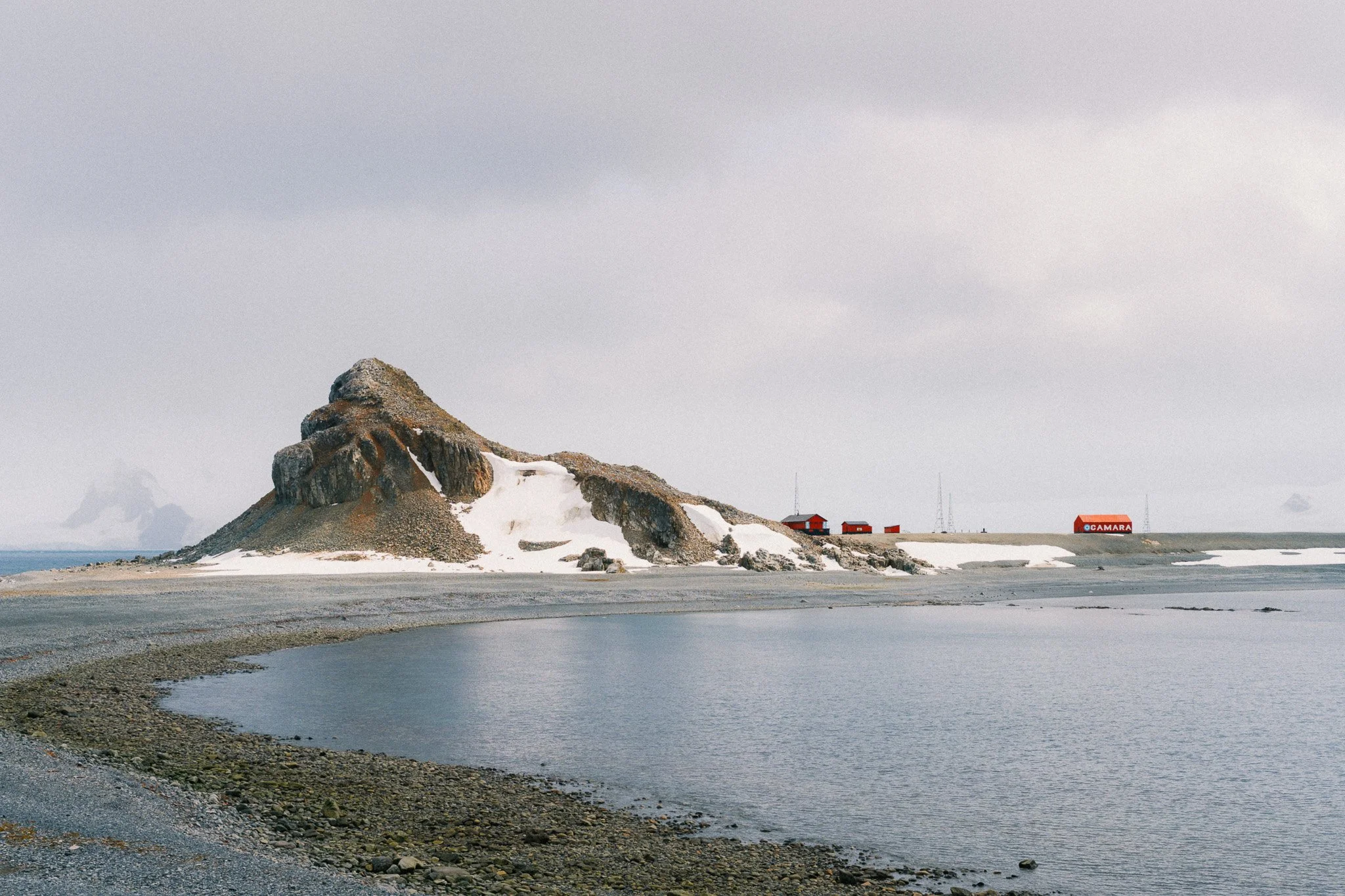
Most photographers had a myriad of lenses, however I found the 24-70 to cover about 80% of my needs, especially on a high resolution body. If I were to go again, I would bring the 70-200 for the wildlife and abstract shots. I didn’t miss the telephoto lens, but a few times it would have been useful. I seldom went wider than 35mm, so a good combo might have been the A7CR with a 40mm prime, and the A7RV with the 70-200.
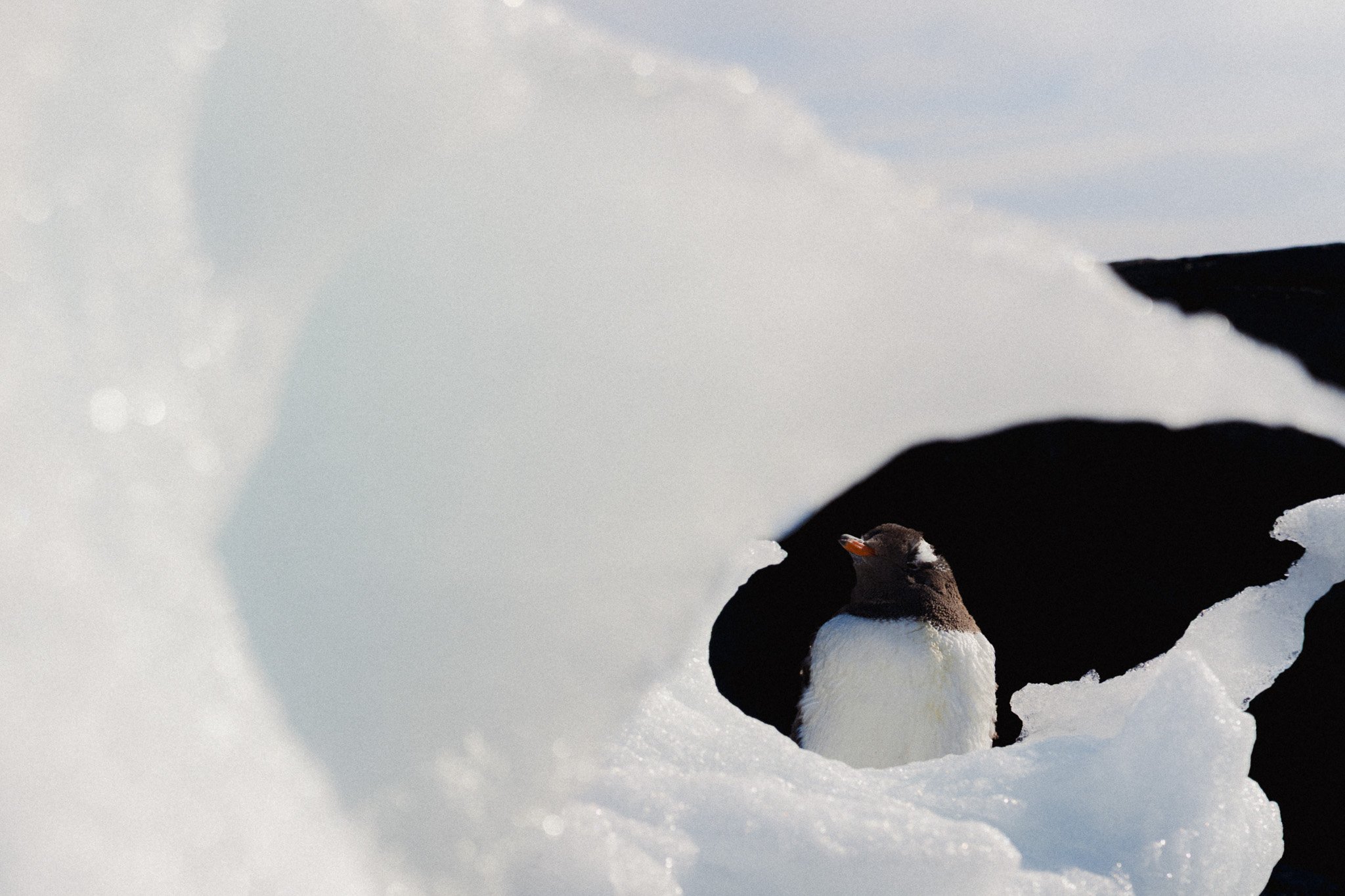
With that said, many people were running multiple bodies with 500mm+ lenses, and while they did give opportunities, it was a total faff getting in and out of zodiacs, as well as clashing with life vests. Some people had 4+ cameras on them and it looked like an utter nightmare, with them spending more time cocking around with their gear instead of shooting. As the trip went on, the average amount of gear that was taken out did reduce. While I missed a few shots by not having another tele with me, I gained many by not needing to mess around. My life was also very stress free in comparison.
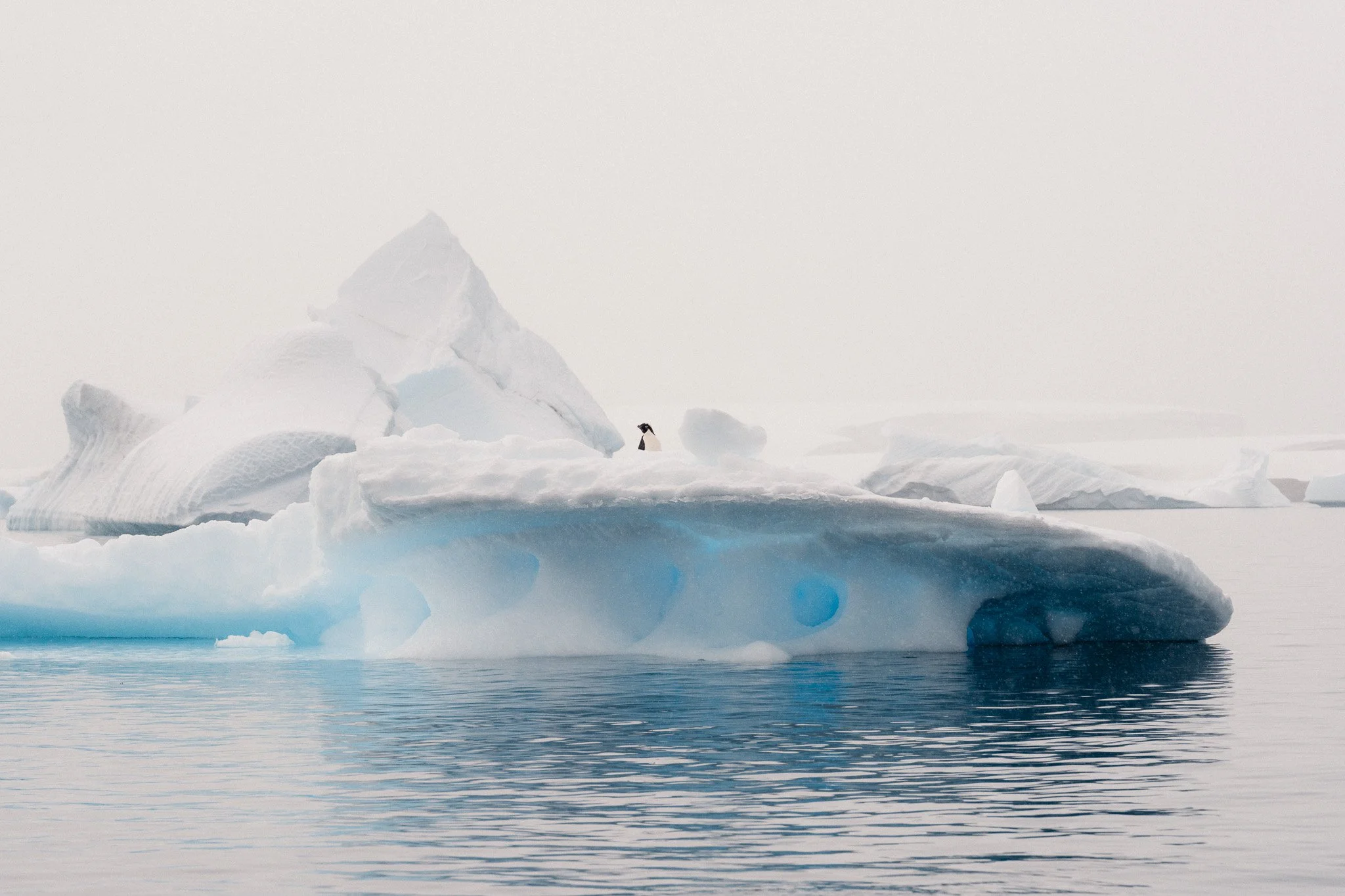
With regards to the photography itself, you have a few options:
Wildlife
Landscapes
Man made elements
Abstract
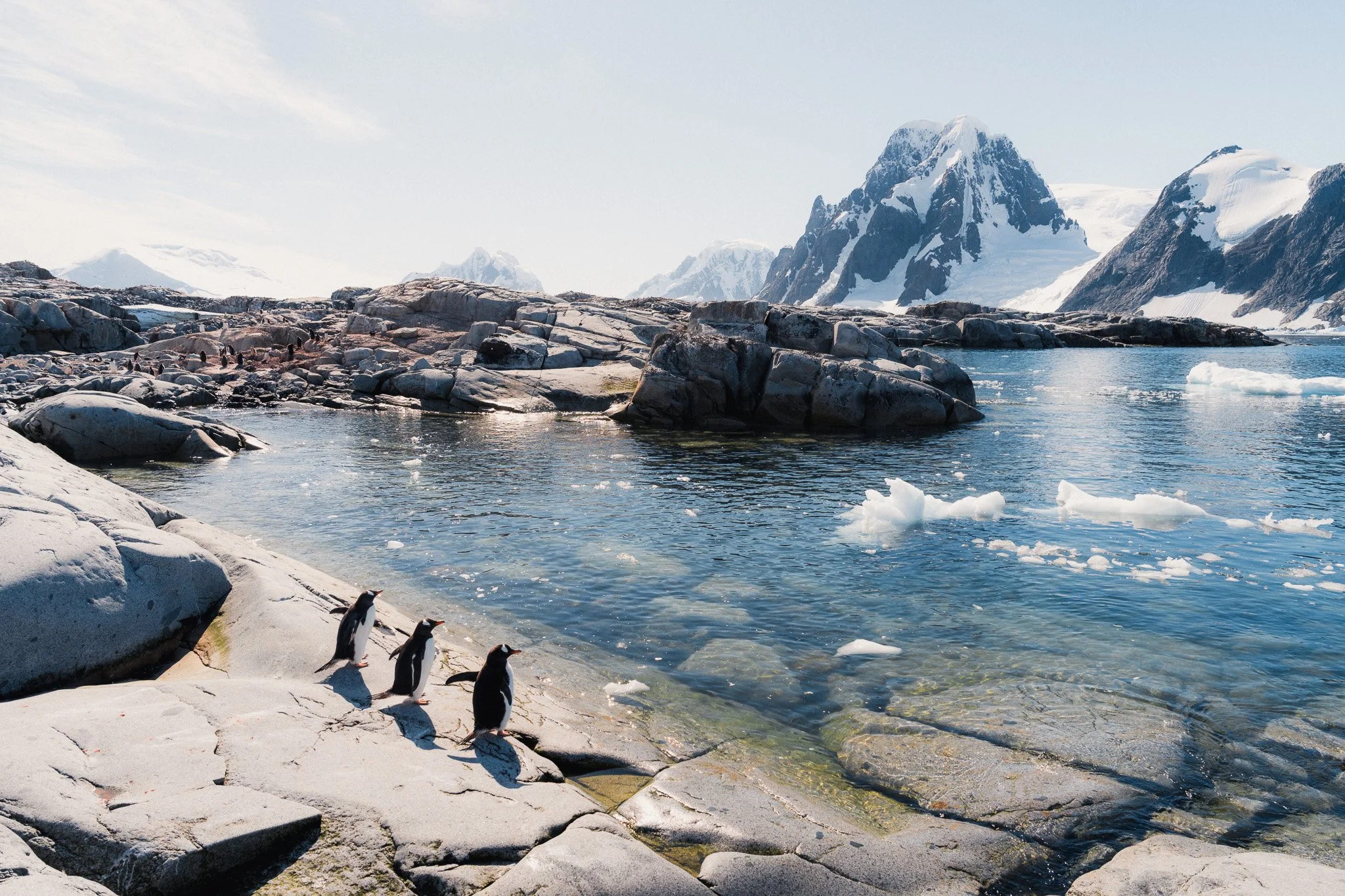
Most people come for the wildlife, which explains the 600mm lenses, and honestly, I can see why. I’ve never been anywhere that was so teeming with wildlife. 10000s of penguins, orcas, whales, sea lions, loads of seabird species, Antarctica really does have everything. I wanted to have the animals in my photos be a part of the whole scene, and not the main subject, which is why the 24-70 worked mostly fine.
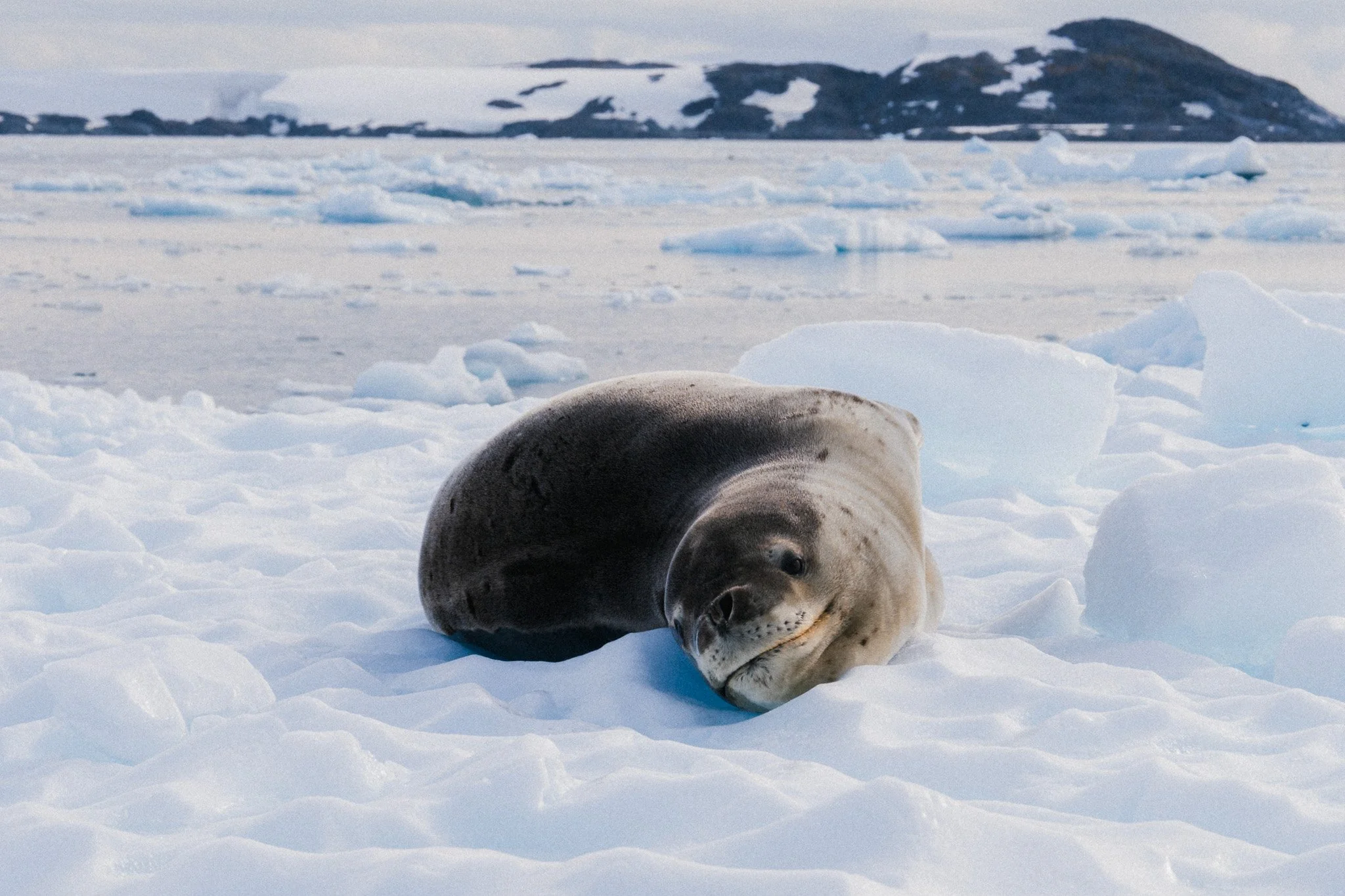
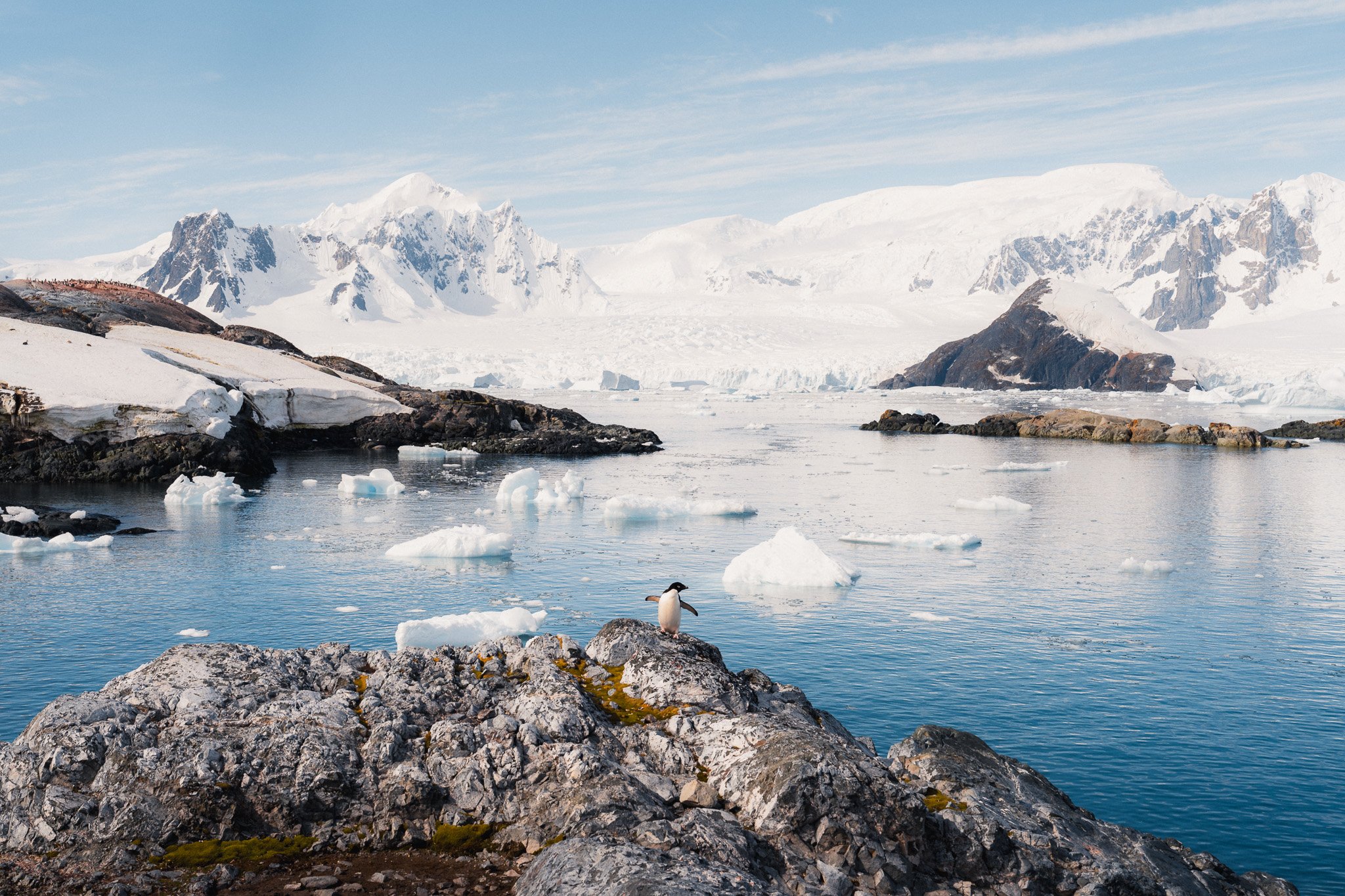
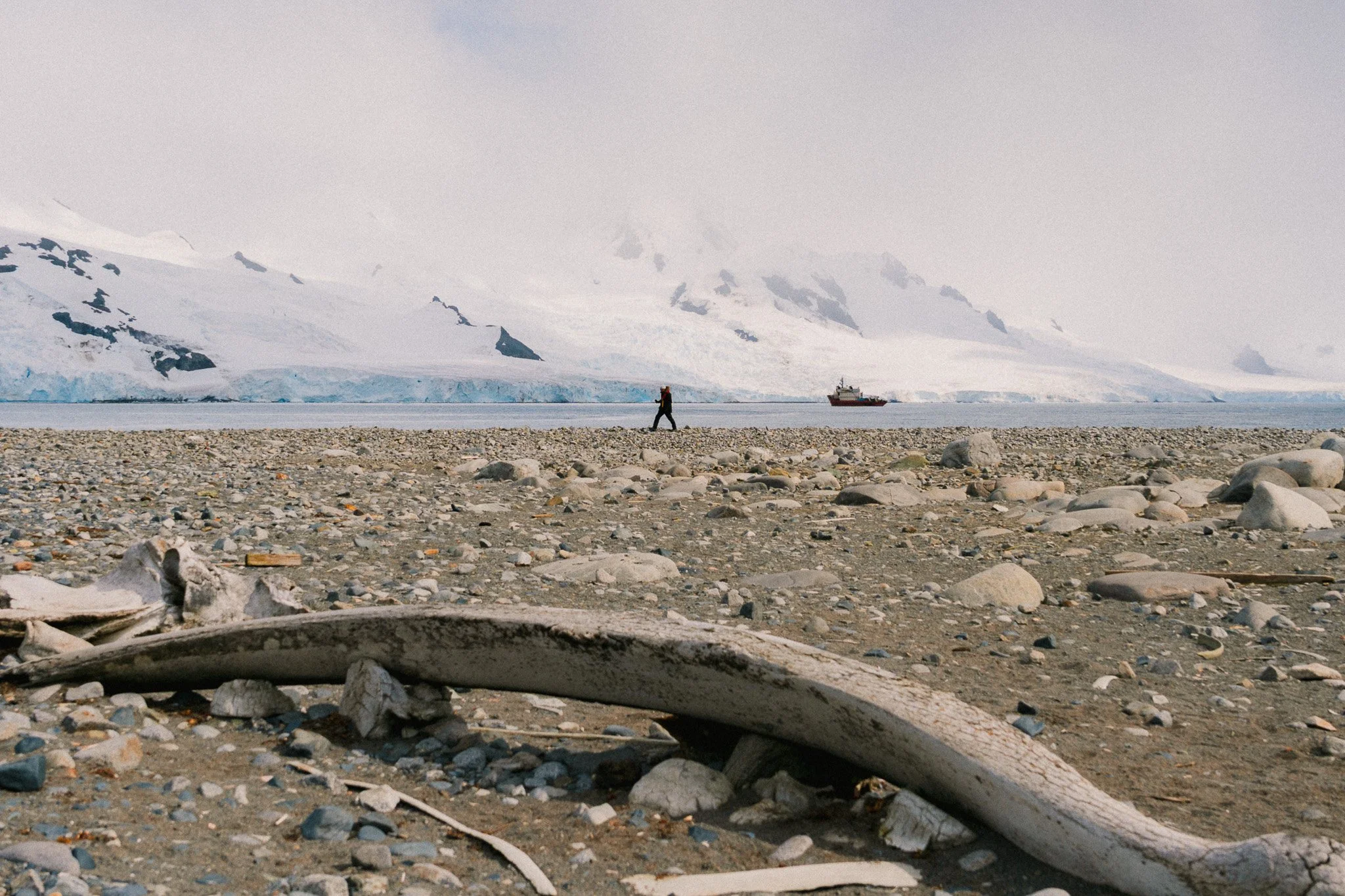
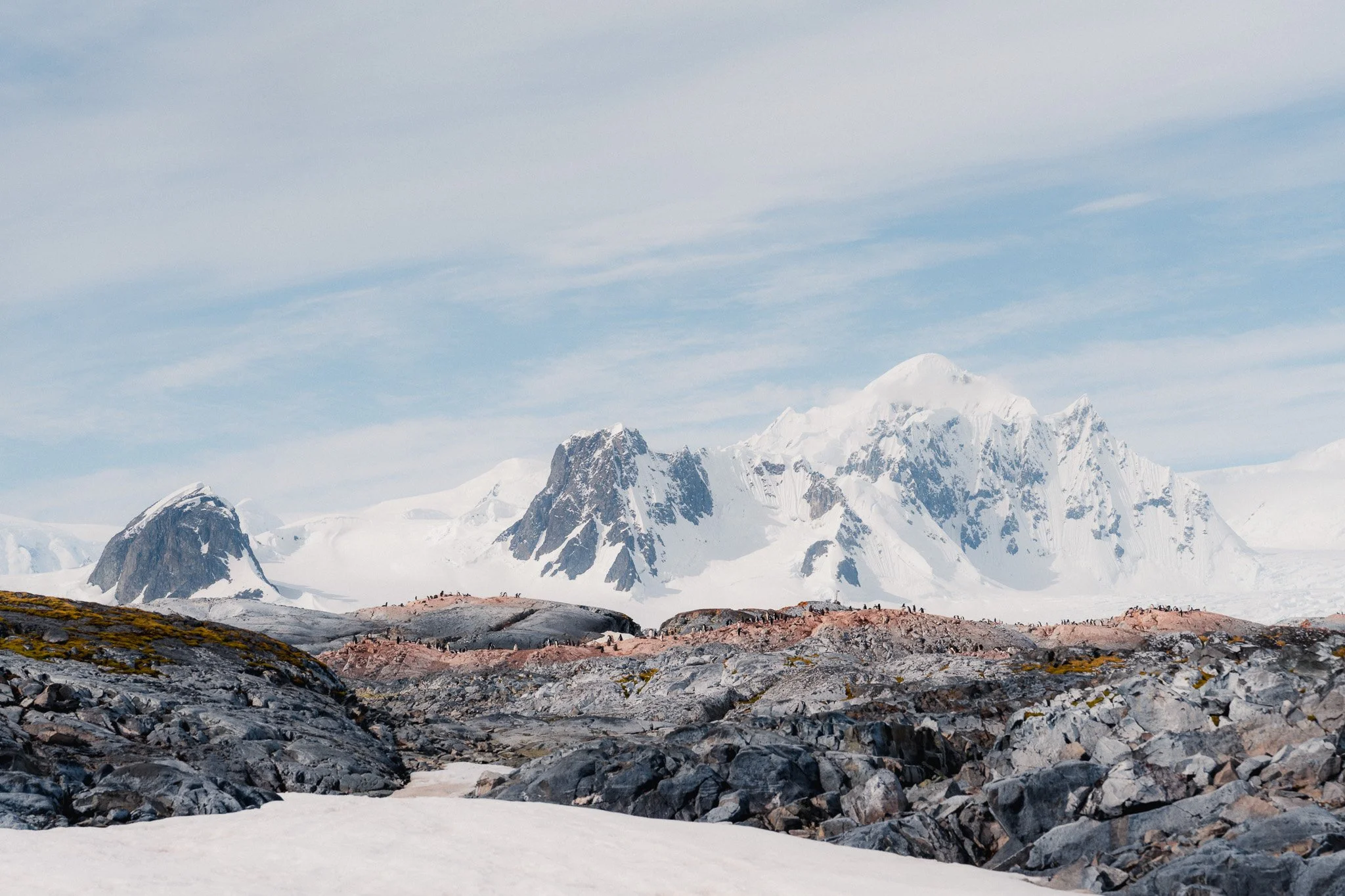
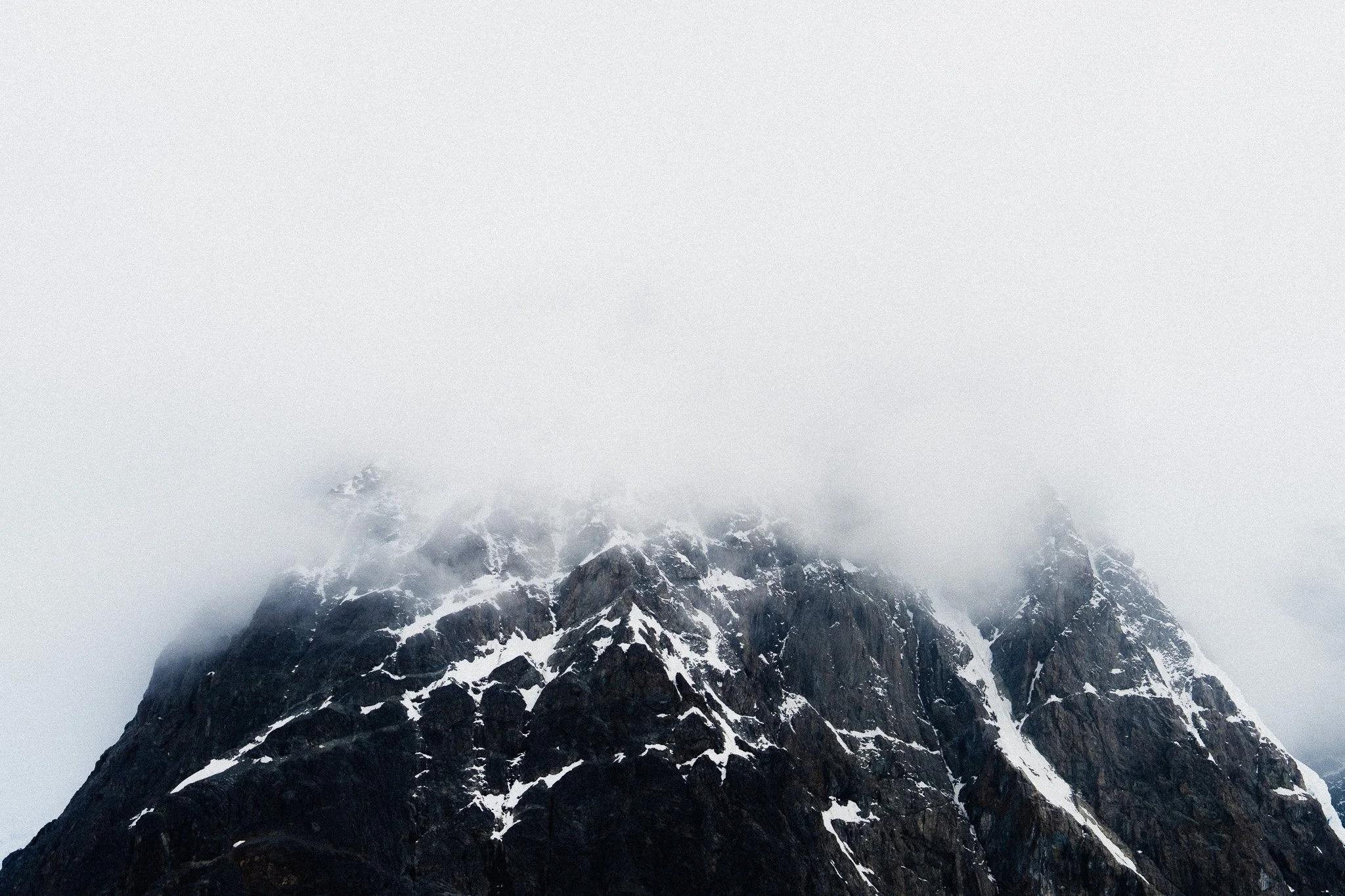
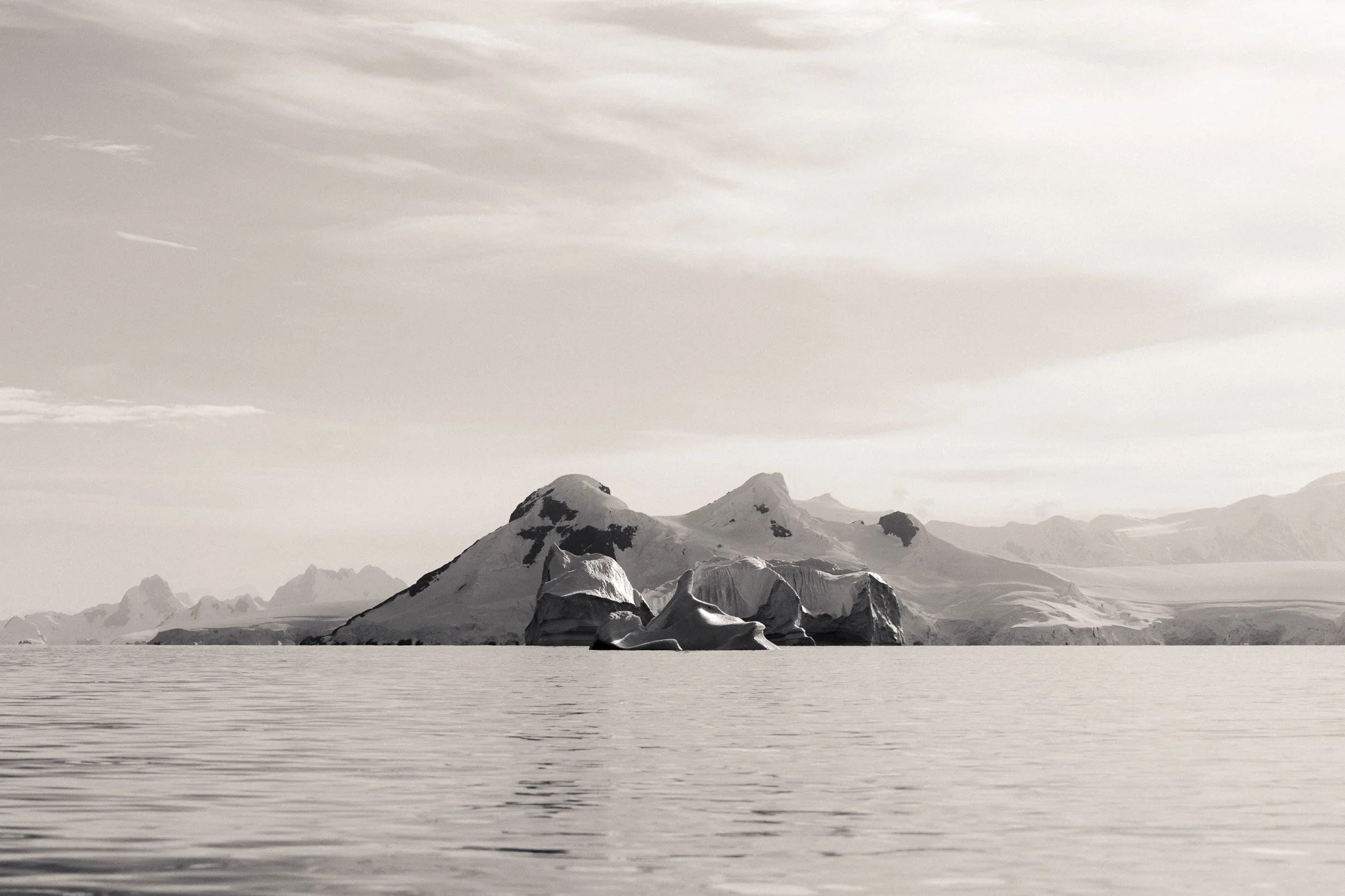
The landscapes are simply stunning, and with the ever changing light, you can get multiple different shots from the same spot. My biggest struggle was conveying the scale of the landscape and its features, because there is nothing to compare it to. My second biggest struggle was the lack of colour, with monochromatic scenes being by far the most common.
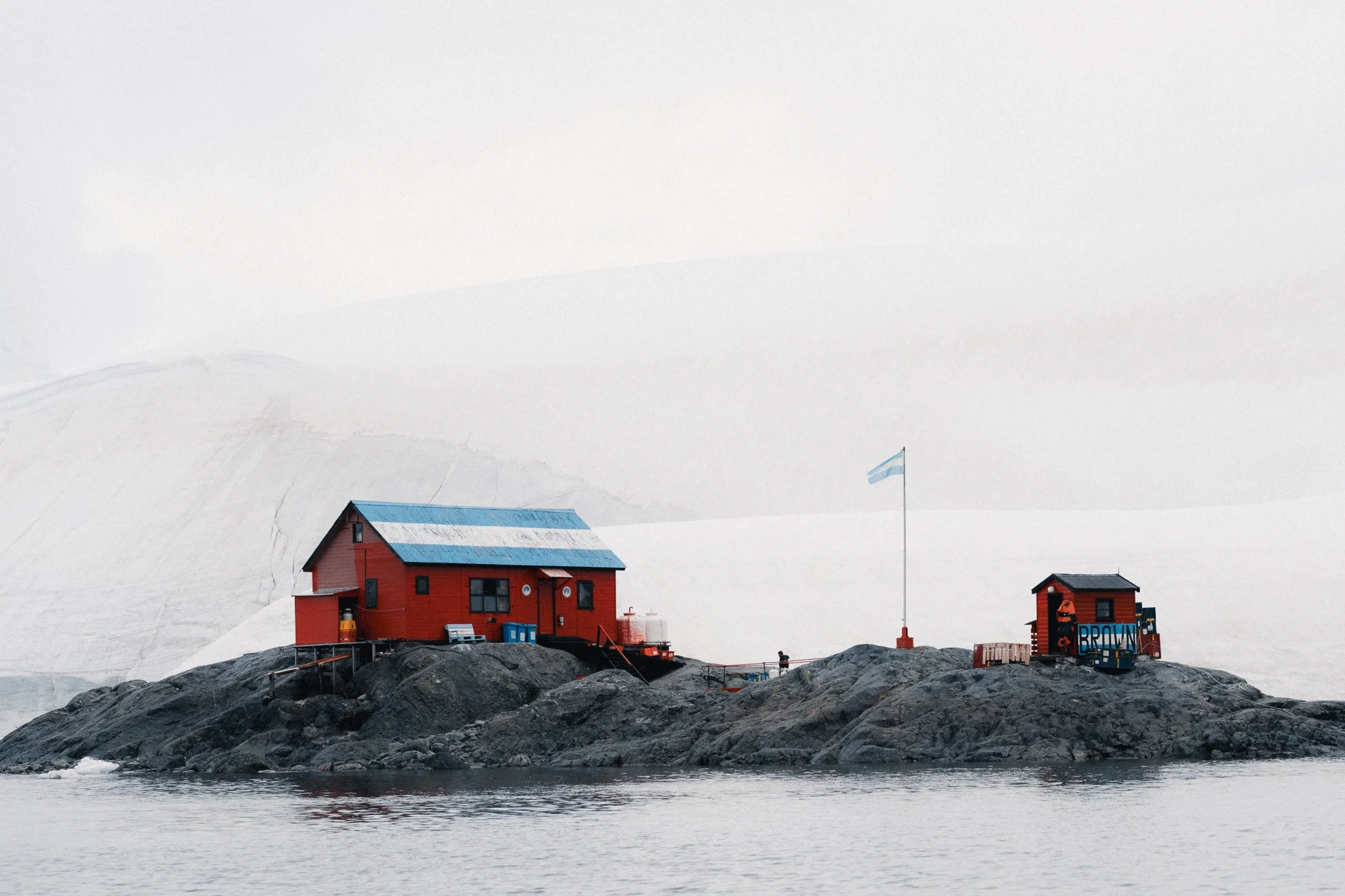
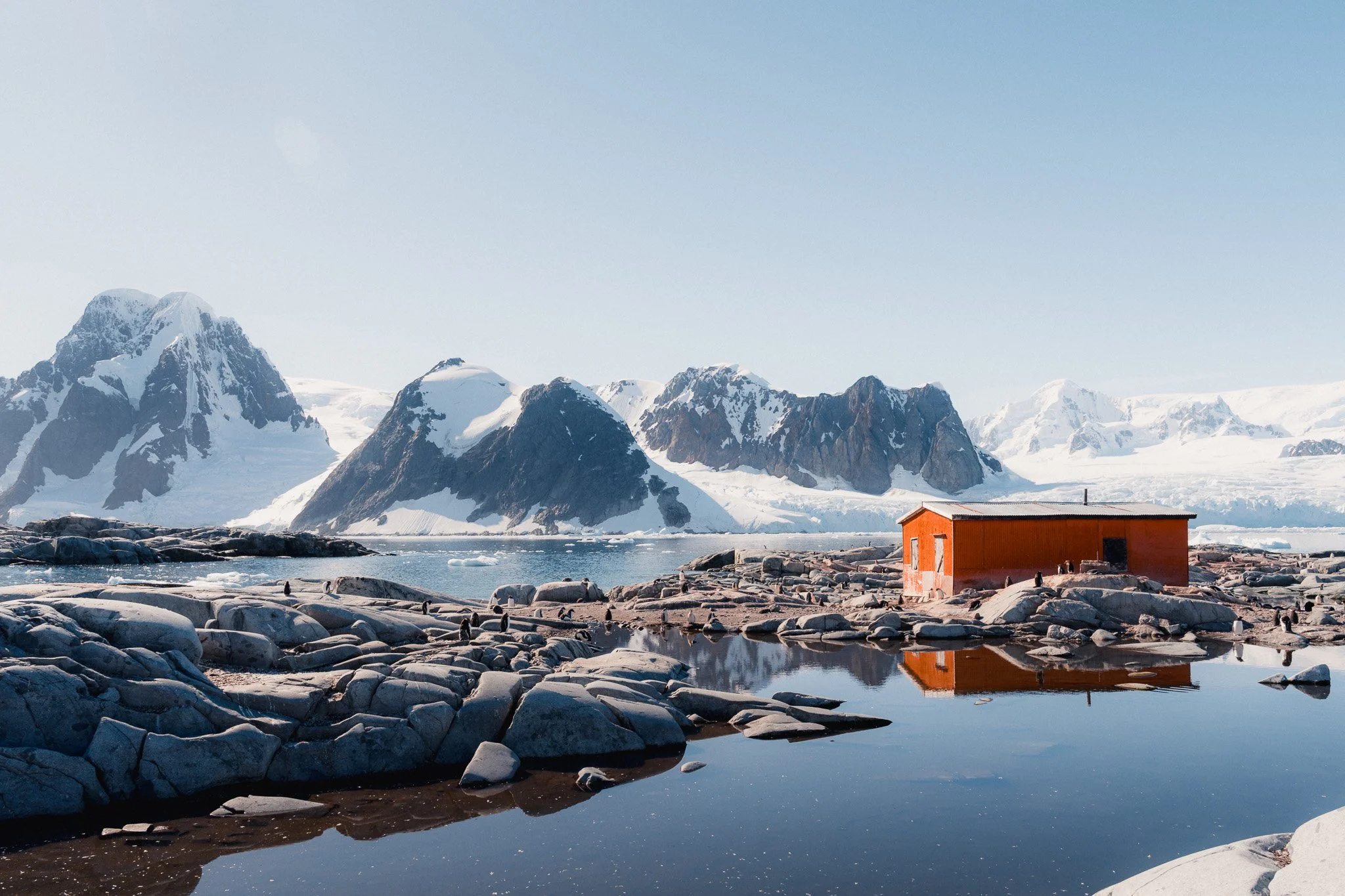
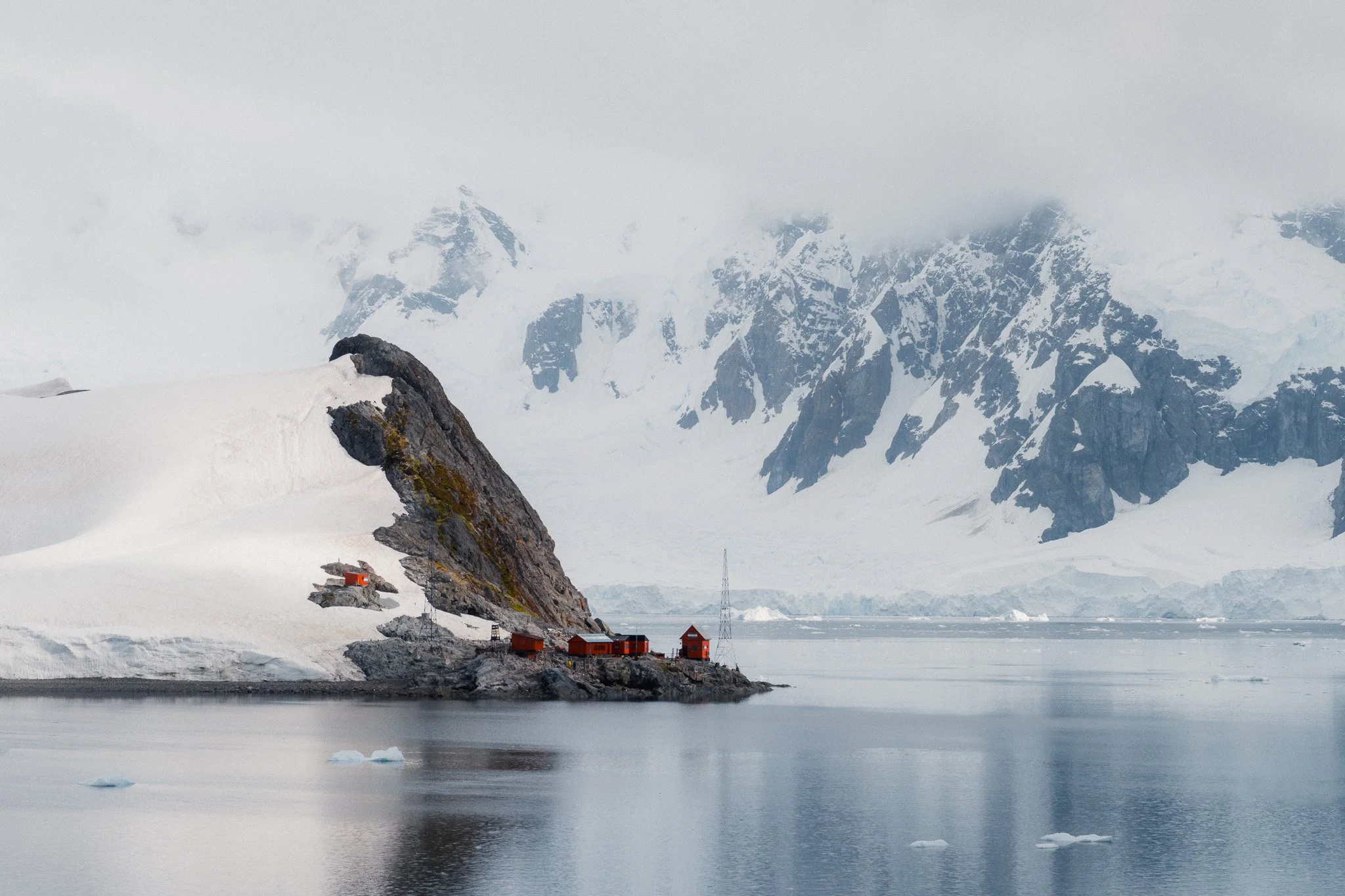
Now and then we would come across some research centres or abandoned huts, both of which added a welcome splash of colour and new things to shoot. Some even had people working or living there which was cool to see.
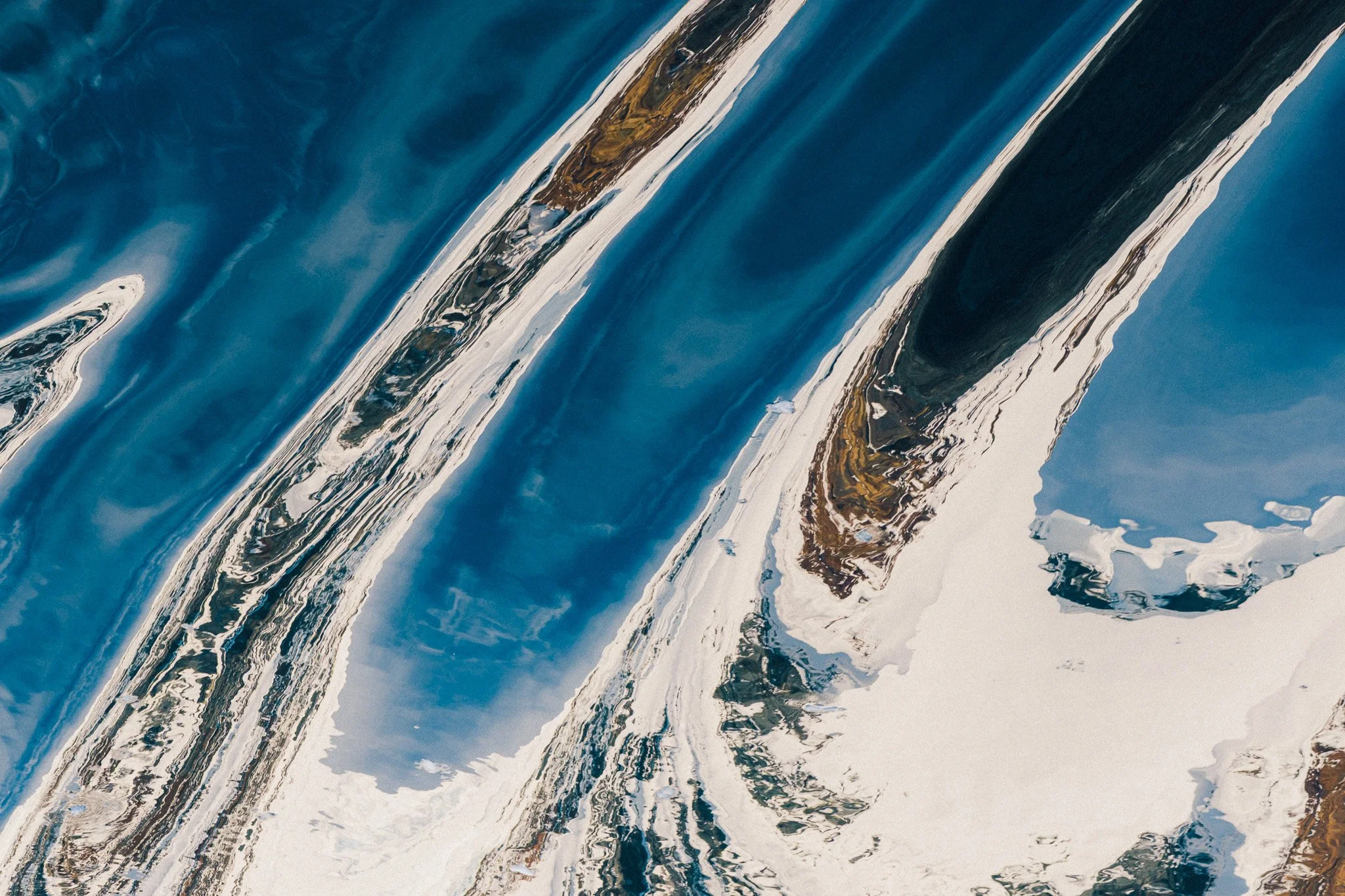
Lastly, this environment provided plenty of opportunities for abstract photography. With so many shapes, patterns, reflections, and not forgetting the incredible light. Having such a minimal and clutter free environment also went a long way to aiding abstract photography.
Landings
Each day we had at least one landing if the weather allowed. Most days we had two and occasionally even a third. A landing is when you take the zodiac to the shore and then explore on foot. All the landing locations were carefully curated beforehand and inspected by the expedition team an hour or so before we would go there ourselves. The guides helped you out of the boats, gave you some instructions, and laid out flags to signal where you can and can’t go.
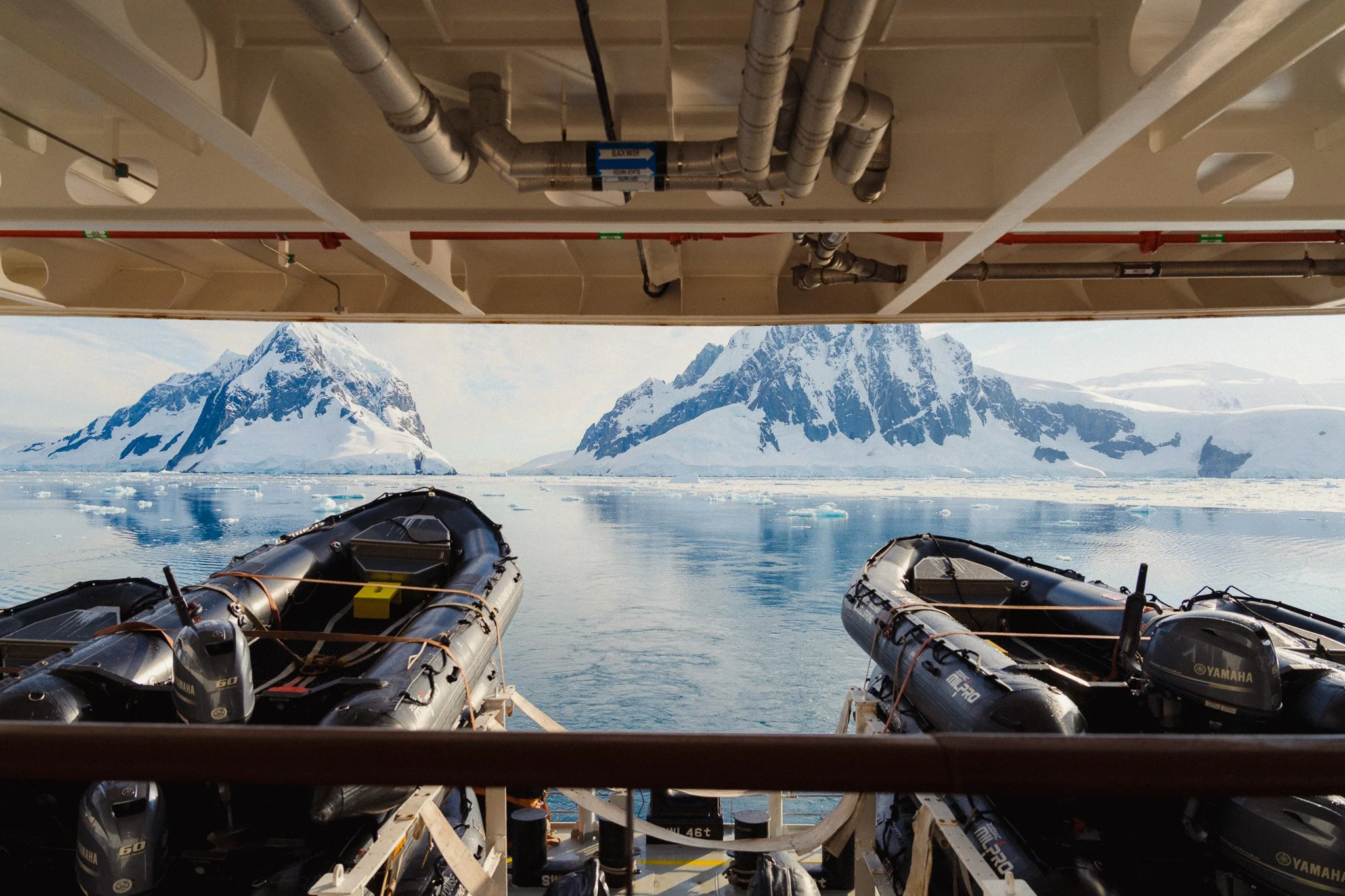
Most landings were to see penguin colonies, abandoned huts, or get a great view of the landscape. Typically they lasted around 2 hours, by which point you would have needed the toilet and to warm up. While the team had a rough idea of the plan, most of the time things changed depending on the weather or even giant ice bergs blocking the path.
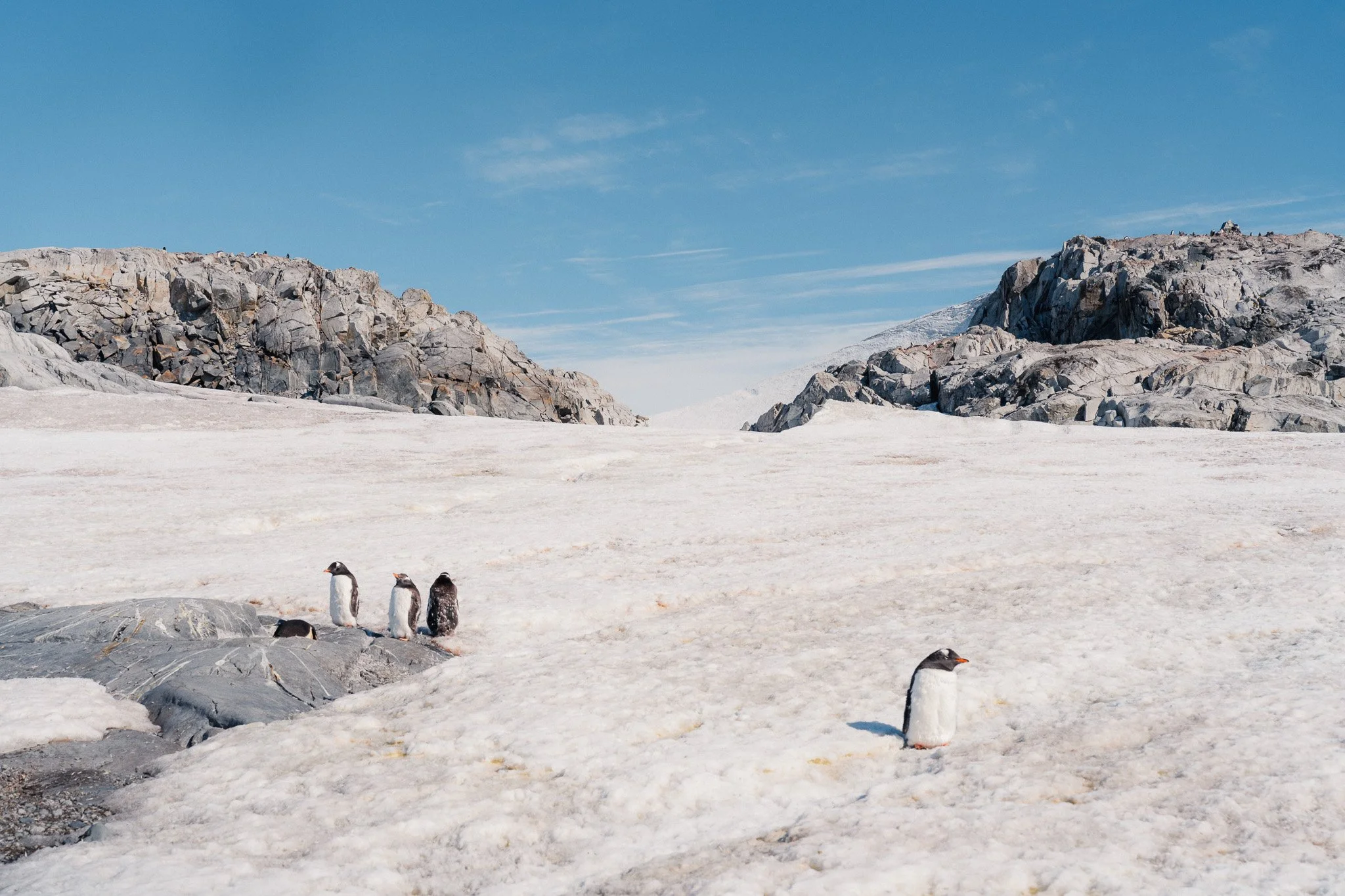
Quite often we had one plan, however due to the conditions we ended up doing something else. For this reason, this isn’t a place to visit if you have strict expectations. Lastly, we were lucky with the weather, and some cruises aren’t as fortunate, so even though we touched land many times, your experience can be very different.
Zodiac Cruises
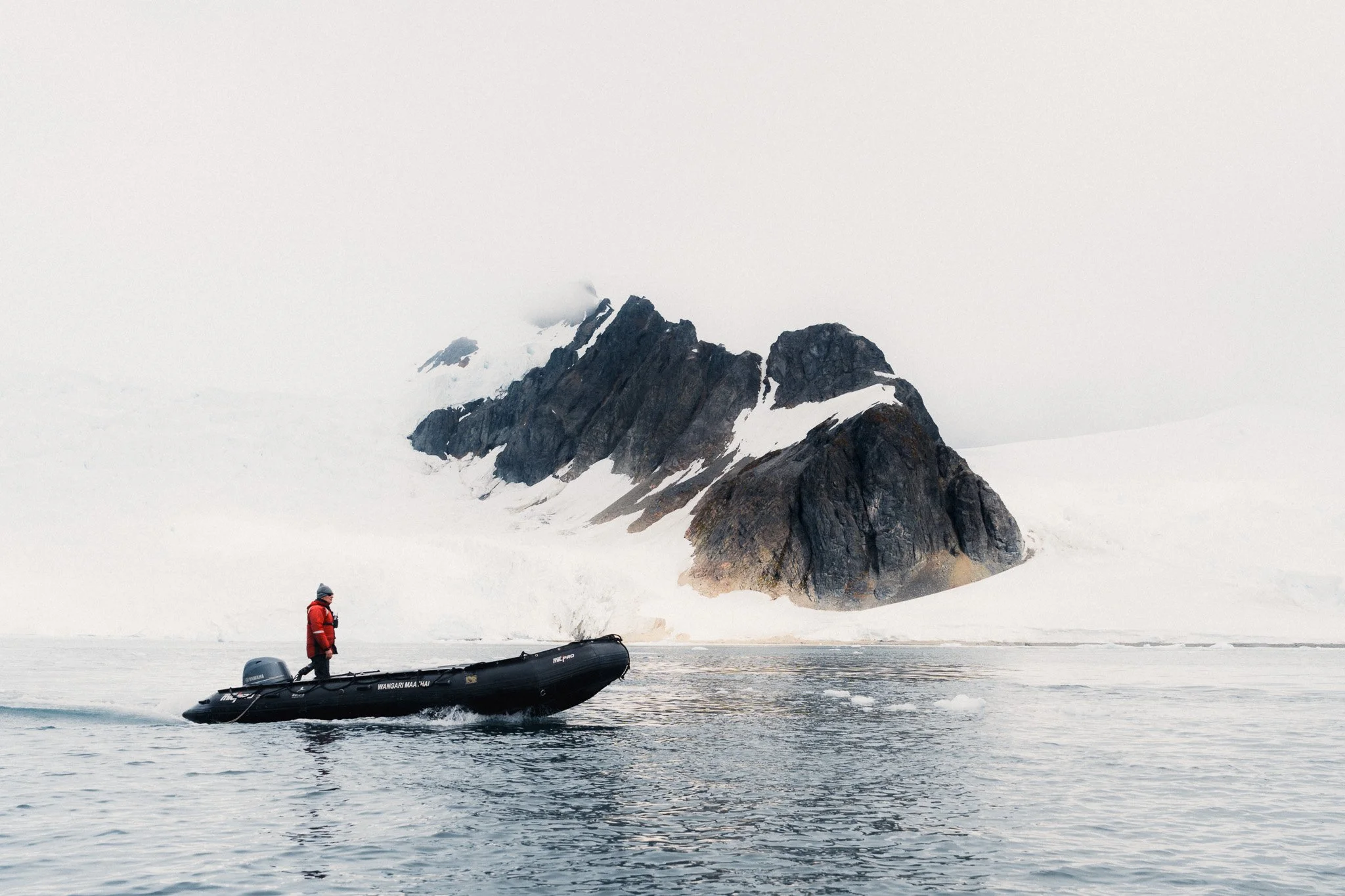
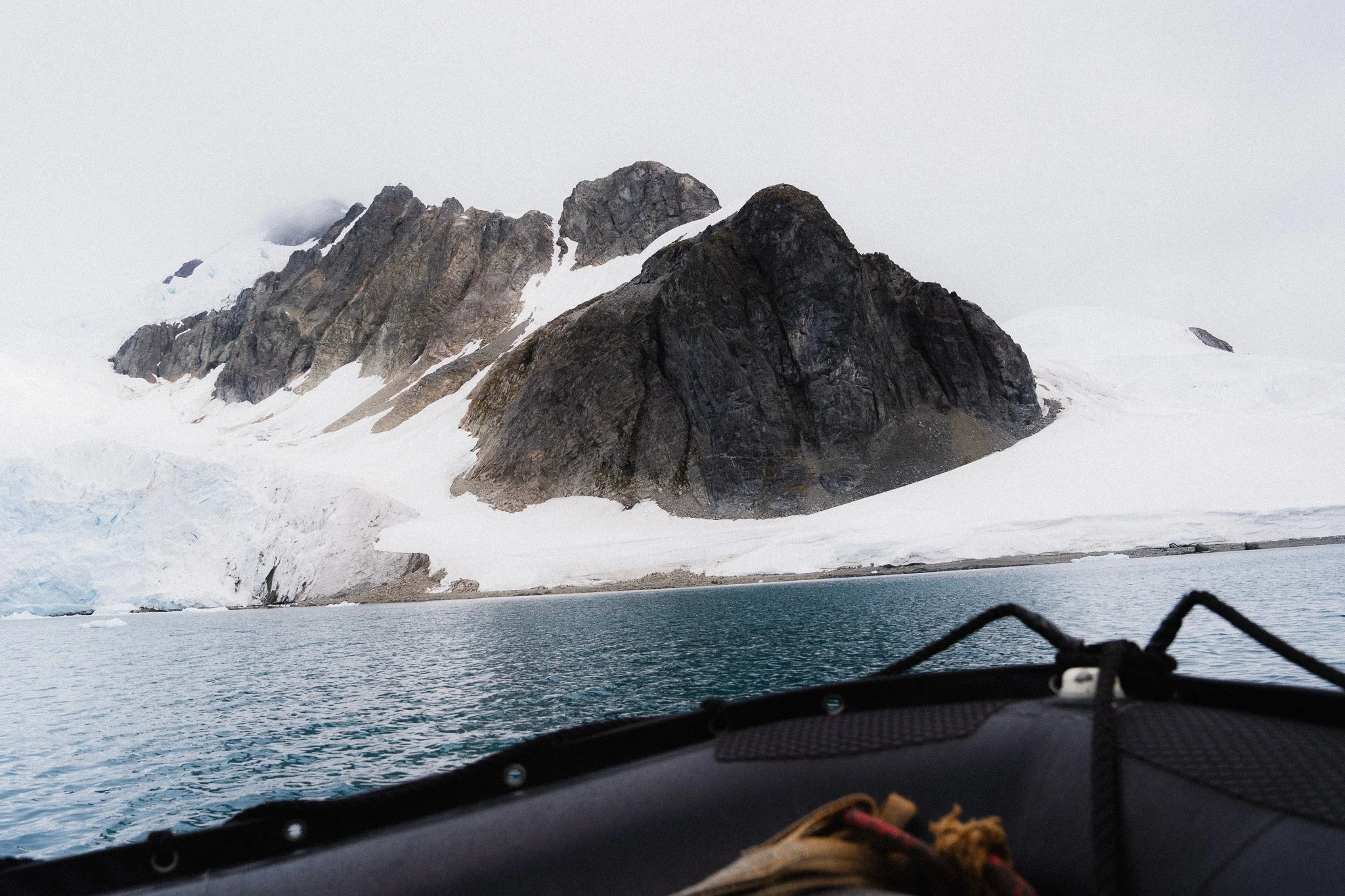
Quite a few times we went out on little cruises in the zodiacs. This was usually to see places where a landing is not possible, to cover large distances, for whale watching, or to get up close and personal with icebergs. I say close, but we still kept a healthy distance, you wouldn’t want one flipping near you. The cruises lasted between 1 and 2 hours, by which point you were pretty cold anyway. Photography was definitely possible, but as expected more challenging. High shutter speeds and burst mode are your friends in this case.
Cruise Experience
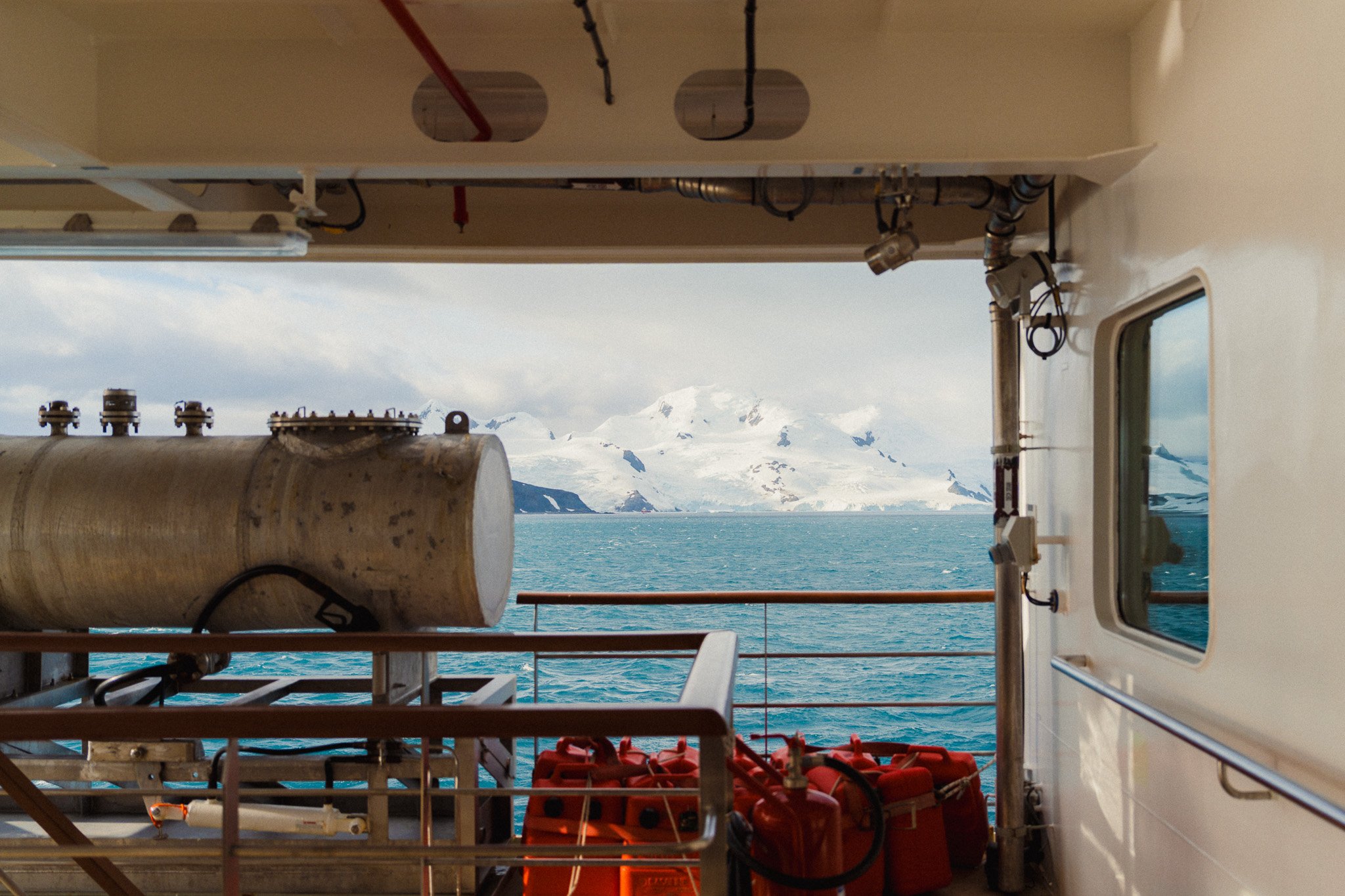
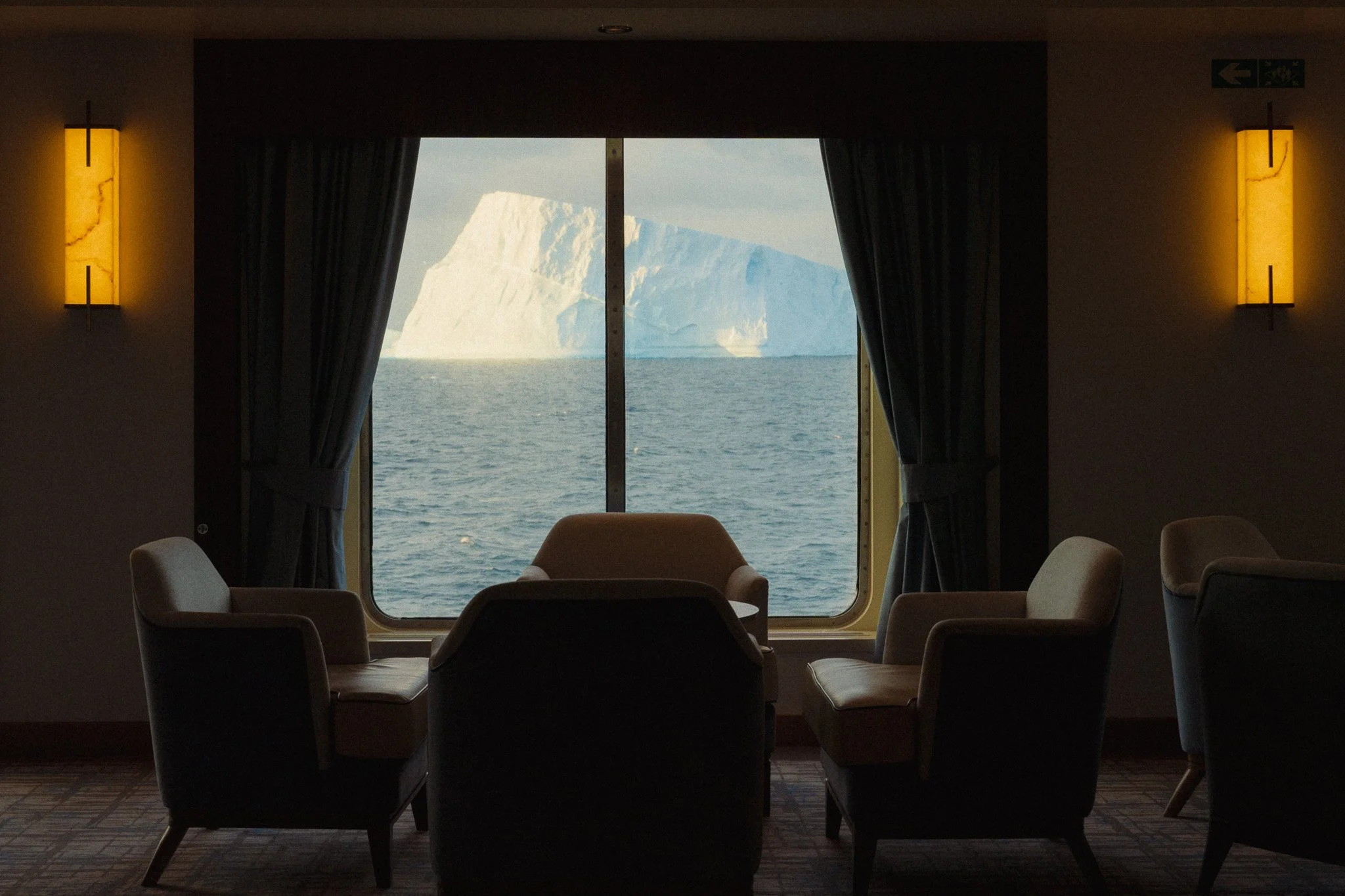
As for the cruise itself, it was a pretty standard experience, but keep in mind I am not an expert on cruises. The cabins were great, the food was wonderful, the ship had all the amenities one could need, and even with 200+ people onboard, it felt very spacious with ample personal space. It was very easy to forget how remote you are when you’re in a hot tub or the gym, having a hot shower, standing on your heated floor, going for an incredible meal, and having a glass of wine before bed. You were having a 5 star experience while being in the most hostile environment on earth. It’s quite something. I really mean hostile, we were told by the crew that during winter months, it’s easier to evacuate someone from the International Space Station.
Overall Experience
It’s now been just over a week since returning and I’ve been thinking about the overall experience in great detail, and not just the highlight moments. This is because I want to say something real, not just “OMG it was amazing best thing ever”, which is rather meaningless.
I’m a city person, so going to the most remote part of the world was never super high on my to do list. However, if I can summarise my feelings into one word, it would be insignificant. Being in Antarctica made me feel insignificant. It made me feel like my life at home, my world, my problems, and my responsibilities didn’t really matter that much any more. Mainland Antarctica is twice the size of the US, and that’s not including all the islands that surround it. I don’t think I can quite comprehend the scale even to this day. I felt insignificant, vulnerable, and exposed knowing there is nothing out there. Strangely, it was a rather liberating feeling.
I’m extremely glad I was lucky enough to go, and while I can’t say I would rush back, it’s an experience that will sit with me for the rest of my life. Even if you’re not into landscapes and wildlife, I think seeing this majestic location is a bucket list item for those who can.
Of course this comes at a cost. Going there isn’t cheap at all, with total costs stretching into the $20,000 ballpark and above. It’s also a place that requires you to be fit and healthy. You really don’t want to miss out because you can’t climb out of a zodiac. It’s also concerning for those with health issues, as help is days away. Last but not least, sailing across the Drake is a good reason alone to reconsider this if you easily feel unwell on boats. There are many reasons not to go, however when put on a set of scales, I feel the experience you will have, and the lessons you will learn, far outweigh the negatives. While I said I wouldn’t rush back, I also wouldn’t say no if an opportunity presented itself.
Future Trips
Towards the end of our trip the team announced there will be another trip in 2028 that will include more locations. I have not been asked to mention it, I get zero commission or brownie points for doing so, I probably won’t be invited again, they like to change photo leaders to keep things fresh, and no one from the team knows I am writing this. This is purely here for information for those who might be interested in this exact trip. https://www.aexpeditions.co.uk/2028-antarctica-through-the-lens?utm_source=mads-peter-iversen&utm_medium=referral&utm_campaign=mads-peter-iversen

Instead of telling you how these will change your life, I would rather be practical and answer the most common questions that people tend to have when buying presets.
What are presets?
They are editing settings that are saved in a file and can be applied to any image.
Why do people buy presets?
Sometimes because they like the work of the photographer and want that style for their own photos. Mostly because they would like to see how other people edit and learn by reverse engineering the presets. Other times it’s just to support their favourite photographers, thank you!
What’s the overall style of these presets?
- Filmic
- Warm
- Soft
- Bright
What are these presets suitable for?
Street & Travel Photography
Some Nature (with further editing)
Some Portraits (with extensive editing)
Do I actually use these?
Yes. This is the same pack I use right now for all my editing. This isn’t a pack made just to sell.
Do these presets get updated?
Yes, as my style changes, these presets will also be updated. Any time a new update is available, you will get a free update via email. Of course you also keep all the old presets in case you prefer the older looks. Only presets purchased from 2025 onwards will receive the updates.
What file types are these presets for?
- All RAW files
- JPEGs & TIFFs (not recommended)
What camera brands are these presets for?
These were designed around Fujifilm, Sony, and Leica sensors. With that said, they will work with all camera brands. While there might be differences due to individual camera colour science, the overall feel of the preset will carry over.
Will these work with JPEG files?
Yes, but you will need to reduce the intensity and make further edits. I strongly recommend editing RAW files.
Are these one click edits?
95% No. You would need to do some basic adjustments as each image is different. These adjustments can include exposure, colour balance etc. In 5% of cases you can just apply and leave it alone.
Do I need to know how to edit?
You need to have a basic understanding of adjusting exposure, highlights, shadows, etc. A more comprehensive editing skillset will let you get the most out of them.
How many presets are included?
10 in the main pack and 24 in the extras pack
Why two packs?
The main pack is what I use for 99% of my edits and is kept small to reduce wasted time scrolling through presets. The extras pack is everything I don’t use often.
What software do I need?
These presets will work with any of the following:
- Photoshop (adobe camera raw)
- Lightroom Classic
- Lightroom Desktop
- Lightroom Mobile
Will these presets work with free versions of the above software?
You need to research and double check before buying. These presets were designed for the full paid versions.
Will these presets work with very old versions of the above software?
You need to research and double check before buying. These presets were designed on and for the latest software.
What file type do I get?
XMP
What else do I get?
- Comprehensive PDF guide
Can I modify these and turn them into my own?
Yes! In fact I encourage you to modify them and play around. Use these to help you get your own style.
I have more questions…. What do I do?
Make a cup of tea and drop me an email on hello@snapsbyfox.com
Please note that due to the nature of digital products, refunds are generally not accepted. However, if you experience any issues, feel free to contact me and I’ll review your situation individually. You are welcome to use this product for personal or commercial projects, but you may not copy, distribute, or resell the files in their original or modified form.
Finally I want to say a massive thank you for supporting me. Buying these presets is the most direct way you can support my work.
Thank you!