
People think my photos are AI
It’s no secret that AI has been causing havoc in the photography world, and while many people generate images to fool others, some photographers face the opposite issue. It started last year when a landscape photographer was getting accused of his work being AI generated. So much so, that he became visibly disheartened and frustrated. I’m sure his work is legitimate because I’ve been aware of him for many years, but people who stumble across his photography for the first time are naturally more sceptical.
He’s not alone, and I can only imagine how it must feel to be called out for something that you haven’t done. I will admit that I often find myself browsing Instagram, coming across an epic shot, and immediately feeling sceptical. I don’t like this world we are in, I don’t like being sceptical, but I also don’t like being fooled.
In recent times, new innovations have added some credibility to images, but 99% of people won’t go through the hassle of digging deeper. So while these technologies are great, they only really help in more serious situations.
I wrote a blog about AI two years ago where I suggested using video as proof of work. The idea was that once you’d taken the photo, you would record a quick clip of the scene. While that might have worked back then, today even that can be AI generated. Whatever new technology comes out, a way to bypass it will be developed not long after. I’ve been pondering this for a while, and I think there’s only one solution, at least in the immediate future.
In my opinion, building genuine trust and a strong track record as an artist is almost as important as creating good work. Let’s say you come across two photographers. One of them is open, transparent, and often shares behind the scenes content, life updates, process, tools, and snippets of their world. Not only that, but they’ve been consistently doing it for years. The second photographer wants to remain mysterious. They are secretive with their process, they aren’t consistent, they just post a polished image and disappear.
Ten years ago, the second photographer would have probably gained more attention because of the mystery. Today, many people would simply assume it’s AI.
I genuinely believe that the only way to prove your work is real, is to show the world that you are real. AI will never replace human connection, and this might be the only reliable way we can sift through the tsunami of bullshit out there. Of course we can still get duped now and then, but I think transparency and consistency are powerful tools for separating the real from the fake.
Does this mean that everyone needs to start a YouTube channel? No. However, the option to remain mysterious is now more harmful than helpful. While I’m not suggesting you become yet another insufferable influencer, I do think there is value in putting yourself out there more. Here are three people I know personally that are doing this well without becoming “content creators”:
Mark Fearnley
Jorge & Christelle (RAW Society)
If you look at their profiles, they share their work, but also aspects of themselves, their process, and their lives. When you follow them, you know who you are following. You know the person making the art you consume, and I believe that connection is more important than even the work itself.
Another good example of this has nothing to do with photography or AI. A few years ago Ed Sheeran was taken to court and accused of plagiarism. After a lengthy battle, he was ultimately found not guilty, however the damage was done, as he won’t get that lost time back. Since then, he has been filming every recording session, and whenever a big song is released, a behind the scenes video of the entire creative process follows.
The initial reasoning for this was to have evidence of originality should someone else decide to take a shot at him, but what actually happened was something even better. People were now “in the room” with him while the song was being made. People could see the whole process from the initial idea to the final production. People could see Ed Sheeran as a normal human being, and not some mysterious celebrity. People could build a connection, which then becomes trust. I don’t think too many people accuse his songs of being AI generated.
So what can you do? I’ve covered a lot of theory, now let me share some practical advice based on personal experience.
Tools - This is an easy one. Share the tools you use to create your work. What camera, lens, focal length, etc. While most of us complain about gear overload, we are also suckers for anything camera related. Sharing what tools you use allows people to have something in common with you.
Process - How do you go about taking photos? How do you compose? How do you edit? All these things bring people into your world and build trust. “But what if someone copies me?” Well, over the years I’ve spoken to more than 100 people who asked me how I make a living. I shared everything with them, and guess how many actually went on to do it? About 1%. You can share everything you know, but without hard work it’s meaningless. The majority of people simply don’t want to do the hard work. Most importantly, only you have the eye you have.
Knowledge - As you learn new things, share them with the world. This doesn’t have to be a YouTube video or annoying short form content. It could simply be a blog that lives on your website. Sharing knowledge helps others, and people rarely forget who helped them.
Behind the scenes - You’ve shared the polished final images, which is great, but sharing what went into making them is also interesting. A classic example is POV YouTube videos. I’m not saying you need to start making them, but perhaps a few iPhone stories from your day out shooting, or a clip of the scene you’ve just photographed, can go a long way.
Interests - If you have interests outside of photography, it might be a good idea to share a small amount of that in moderation. If you’re into cycling, then posting a photo of your bike on a trail from time to time can help people with similar interests connect with you more. Be careful not to overdo it though, because the line between intrigue and disconnection is rather fine.
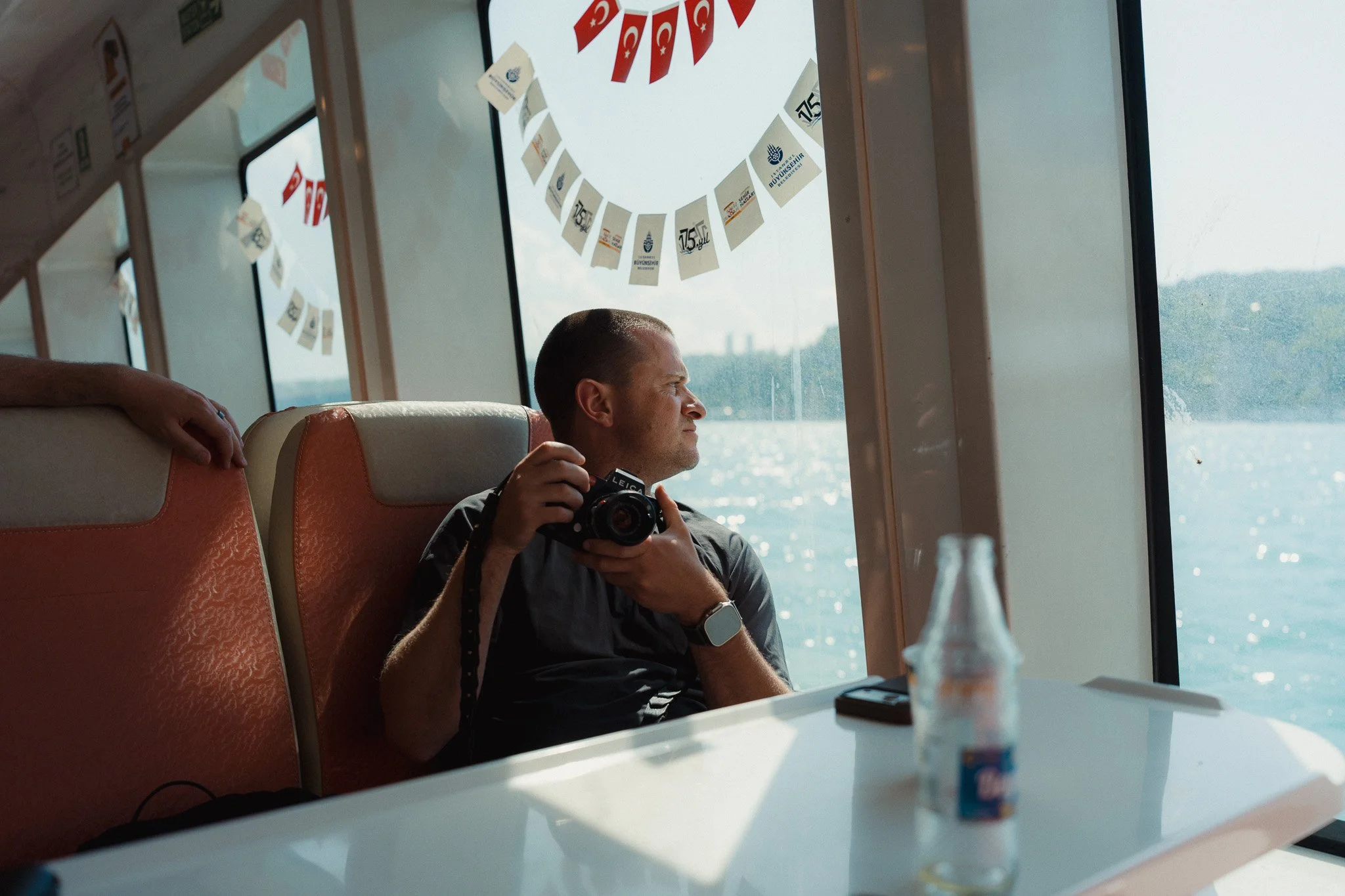
Your face - This is a huge stumbling block for most people, and it was by far the biggest one for me too. Despite the difficulty, sharing your face is one of the strongest ways to add credibility to your work. People trust people, and since we naturally look for faces first, having yourself visible is beneficial. Of course, if you’re uncomfortable, there are still ways of showing yourself without fully showing your face. This is the only point where how you feel should take priority over everything else.
A word of caution, don’t overshare. There’s a fine line between being interesting and annoying. You don’t want to become the person posting 30 daily stories about every single thing they’ve done. While people might be interested in your life, the primary reason they follow you is for your work, not your morning routine.
This is a big one, exercise caution around religion and politics. Whatever you believe in, there will always be people who hate you for it. These two topics are incredibly inflammatory and divisive, especially online where people tend to dehumanise one another. Unless your work revolves around these topics, or you are deeply passionate about them, I suggest staying clear.
Last but not least, all of this is only relevant if you care about people believing your work is real, if photography is part of your business, or if you want to build a name for yourself. If you have a few million quid sitting in an investment account making 4%, and you genuinely couldn’t care less about anyone else’s opinion of you or your work, then you’ve probably won at life. Stay hidden and enjoy it, I won’t be jealous…

Instead of telling you how these will change your life, I would rather be practical and answer the most common questions that people tend to have when buying presets.
What are presets?
They are editing settings that are saved in a file and can be applied to any image.
Why do people buy presets?
Sometimes because they like the work of the photographer and want that style for their own photos. Mostly because they would like to see how other people edit and learn by reverse engineering the presets. Other times it’s just to support their favourite photographers, thank you!
What’s the overall style of these presets?
- Filmic
- Warm
- Soft
- Bright
What are these presets suitable for?
Street & Travel Photography
Some Nature (with further editing)
Some Portraits (with extensive editing)
Do I actually use these?
Yes. This is the same pack I use right now for all my editing. This isn’t a pack made just to sell.
Do these presets get updated?
Yes, as my style changes, these presets will also be updated. Any time a new update is available, you will get a free update via email. Of course you also keep all the old presets in case you prefer the older looks. Only presets purchased from 2025 onwards will receive the updates.
What file types are these presets for?
- All RAW files
- JPEGs & TIFFs (not recommended)
What camera brands are these presets for?
These were designed around Fujifilm, Sony, and Leica sensors. With that said, they will work with all camera brands. While there might be differences due to individual camera colour science, the overall feel of the preset will carry over.
Will these work with JPEG files?
Yes, but you will need to reduce the intensity and make further edits. I strongly recommend editing RAW files.
Are these one click edits?
95% No. You would need to do some basic adjustments as each image is different. These adjustments can include exposure, colour balance etc. In 5% of cases you can just apply and leave it alone.
Do I need to know how to edit?
You need to have a basic understanding of adjusting exposure, highlights, shadows, etc. A more comprehensive editing skillset will let you get the most out of them.
How many presets are included?
10 in the main pack and 24 in the extras pack
Why two packs?
The main pack is what I use for 99% of my edits and is kept small to reduce wasted time scrolling through presets. The extras pack is everything I don’t use often.
What software do I need?
These presets will work with any of the following:
- Photoshop (adobe camera raw)
- Lightroom Classic
- Lightroom Desktop
- Lightroom Mobile
Will these presets work with free versions of the above software?
You need to research and double check before buying. These presets were designed for the full paid versions.
Will these presets work with very old versions of the above software?
You need to research and double check before buying. These presets were designed on and for the latest software.
What file type do I get?
XMP
What else do I get?
- Comprehensive PDF guide
Can I modify these and turn them into my own?
Yes! In fact I encourage you to modify them and play around. Use these to help you get your own style.
I have more questions…. What do I do?
Make a cup of tea and drop me an email on hello@snapsbyfox.com
Please note that due to the nature of digital products, refunds are generally not accepted. However, if you experience any issues, feel free to contact me and I’ll review your situation individually. You are welcome to use this product for personal or commercial projects, but you may not copy, distribute, or resell the files in their original or modified form.
Finally I want to say a massive thank you for supporting me. Buying these presets is the most direct way you can support my work.
Thank you!