
The Perfect Day Trip From Saigon (Ho Chi Minh City)
Ho Chi Minh City (Saigon) is a hectic city, and it doesn’t take much to get overwhelmed by all the hustle and bustle. Equally, this isn’t a seaside spot, so if you feel like escaping to the beach to unwind, I can recommend just the place.
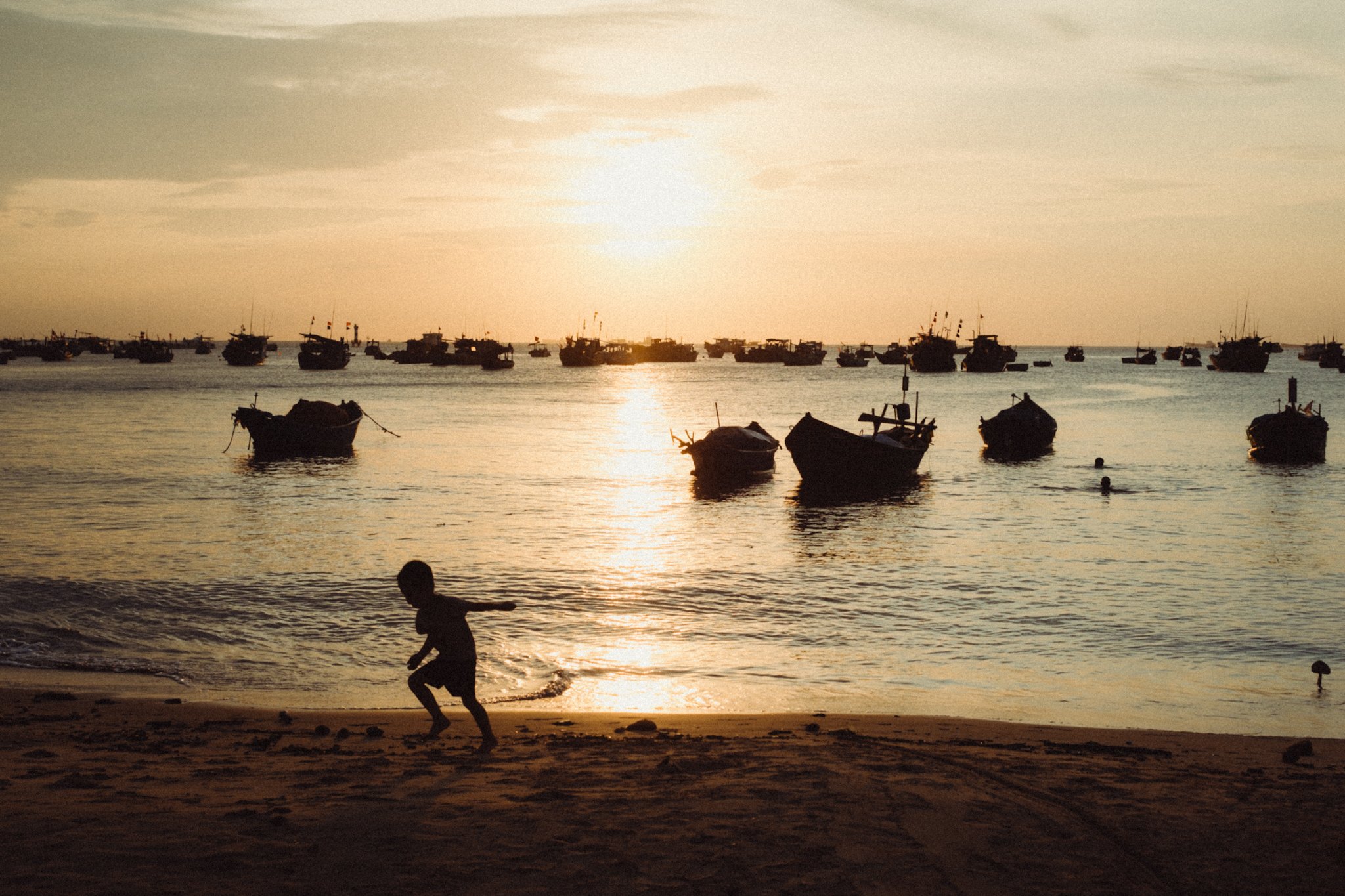
A mere two-hour drive from Saigon is a small seaside town called Vung Tau. During our visit in November, we experienced one of the most incredible sunsets. It was so nice to just walk along the beach, watch people go about their day, and see the skies change from yellow to orange to dark blue.


You will also find fishermen setting off on their small boats, which makes for great photography.


As the sun set, a large fishing boat approached full of fresh seafood, and immediately the beach turned into a market. People gathered from everywhere, looking to get the best food before it was gone. This was an amazing sight to see, and for a moment you almost felt like a local observing.


After that, we went for a stroll around the town, which was pretty quiet because it was a weekday. On weekends, it gets busy with locals flocking down from nearby towns and Saigon. It’s also worth mentioning the lack of mass tourism here—or any Western tourism, for that matter—which felt like a nice change.


We only spent the late afternoon and evening in Vung Tau because during the day we were unwinding at the Imperial Hotel Vung Tau. I say hotel, but this is more like a resort with all the facilities one could ever want. For full transparency, the Imperial Hotel let us stay one night for free in exchange for some photos and a mention on social media. With that said, if I ever return to this area, I would definitely stay here again and request a sea-view room. You can find out more about this hotel here.


Another advantage of this hotel is that it’s in the middle of two great locations. The first one was Vung Tau, which we’ve already seen. The second one is called Long Hai. This is a very small fishing village that probably never gets any tourism. The highlight for me was the fishermen who had come back from night fishing and were organising all their equipment on the beach.


They were all super friendly and happy for us to get closer and take photos as they sorted things out. This allowed me to get more creative with compositions that otherwise I couldn’t do if I had to keep my distance.




In total, we spent four hours walking up and down this beach and taking photos, and even though we all walked away with some of our favourite images, we all got heatstroke. I had it the worst, and it knocked me out for three days afterward. Despite the temperature not being that high, the sun is incredibly strong, and I didn’t have a hat or drink anywhere near as much as I should have. Lesson learned.


After the beach, we found a nice little shack where we could have a drink and watch the world go by for a bit. It’s fascinating how people here seem so happy with so little (by Western standards), while back in the West, we are often so unhappy with so much more. Maybe that’s for another blog, though.


Once we finished, we walked back to the main road, which involved exploring the tight streets of the village and even watching some locals play pool.


Finally, we headed back to the hotel, collected our stuff, and made our way back to Saigon. The transport between Saigon and Vung Tau was arranged by the hotel, and we were collected from their restaurant in the city centre. The drop-off point was the same too, using their shuttle service. The transport around the local area was by using Grab (a local Uber).

When it comes to photography, everything you see here was shot on my Fujifilm XH2s and three primes: 18mm, 33mm, and 90mm. In full-frame terms, this is 28mm, 50mm, and 135mm. I hope you found this blog helpful and that it aids you a little in planning your trip or finding inspiration for where to travel to next. Thanks for reading, and speak soon!




Instead of telling you how these will change your life, I would rather be practical and answer the most common questions that people tend to have when buying presets.
What are presets?
They are editing settings that are saved in a file and can be applied to any image.
Why do people buy presets?
Sometimes because they like the work of the photographer and want that style for their own photos. Mostly because they would like to see how other people edit and learn by reverse engineering the presets. Other times it’s just to support their favourite photographers, thank you!
What’s the overall style of these presets?
- Filmic
- Warm
- Soft
- Bright
What are these presets suitable for?
Street & Travel Photography
Some Nature (with further editing)
Some Portraits (with extensive editing)
Do I actually use these?
Yes. This is the same pack I use right now for all my editing. This isn’t a pack made just to sell.
Do these presets get updated?
Yes, as my style changes, these presets will also be updated. Any time a new update is available, you will get a free update via email. Of course you also keep all the old presets in case you prefer the older looks. Only presets purchased from 2025 onwards will receive the updates.
What file types are these presets for?
- All RAW files
- JPEGs & TIFFs (not recommended)
What camera brands are these presets for?
These were designed around Fujifilm, Sony, and Leica sensors. With that said, they will work with all camera brands. While there might be differences due to individual camera colour science, the overall feel of the preset will carry over.
Will these work with JPEG files?
Yes, but you will need to reduce the intensity and make further edits. I strongly recommend editing RAW files.
Are these one click edits?
95% No. You would need to do some basic adjustments as each image is different. These adjustments can include exposure, colour balance etc. In 5% of cases you can just apply and leave it alone.
Do I need to know how to edit?
You need to have a basic understanding of adjusting exposure, highlights, shadows, etc. A more comprehensive editing skillset will let you get the most out of them.
How many presets are included?
10 in the main pack and 24 in the extras pack
Why two packs?
The main pack is what I use for 99% of my edits and is kept small to reduce wasted time scrolling through presets. The extras pack is everything I don’t use often.
What software do I need?
These presets will work with any of the following:
- Photoshop (adobe camera raw)
- Lightroom Classic
- Lightroom Desktop
- Lightroom Mobile
Will these presets work with free versions of the above software?
You need to research and double check before buying. These presets were designed for the full paid versions.
Will these presets work with very old versions of the above software?
You need to research and double check before buying. These presets were designed on and for the latest software.
What file type do I get?
XMP
What else do I get?
- Comprehensive PDF guide
Can I modify these and turn them into my own?
Yes! In fact I encourage you to modify them and play around. Use these to help you get your own style.
I have more questions…. What do I do?
Make a cup of tea and drop me an email on hello@snapsbyfox.com
Please note that due to the nature of digital products, refunds are generally not accepted. However, if you experience any issues, feel free to contact me and I’ll review your situation individually. You are welcome to use this product for personal or commercial projects, but you may not copy, distribute, or resell the files in their original or modified form.
Finally I want to say a massive thank you for supporting me. Buying these presets is the most direct way you can support my work.
Thank you!